Cryptocurrency Tips

💰 Want to Profit from Cryptocurrency Tips Like the Pros?
👉 Discover the strategy that helped early adopters multiply their earnings.

Friday, October 23, 2026

Bitcoin Pulls Back, but Falling Oil and Yields Could Help

Bitcoin Pulls Back, but Falling Oil and Yields Could Help

The Bitcoin price failed to break out once again and suffered a dip on Tuesday, pulling back 3.5% - equivalent to around $3,000. Oil rose slightly, but could not shake off the current downtrend. The U.S. 10-year bond yield is still very high at 5.3%, but the indications are it may be starting to roll over and soften back to 5% in the short to medium term.

Oil price to fall out of its channel?

Source: TradingView

WTI Crude Oil is at a critical juncture. On Tuesday the price fell through the bottom of the ascending channel formation, but managed to recover by the end of the day. It’s more likely than not that this pattern does break to the downside, and therefore it’s good to conjecture where the oil price will fall to.

The first horizontal support is at $84, and it can be seen that the 200-day SMA is also approaching this point. This moving average would bolster the horizontal support, but if these break to the downside we are looking at a fall to $75 and very possibly $68, which also happens to mark the full measured move out of the channel.

If oil bounces from its current level it could reach $93, with an outside possibility of $105, which will definitely depend on how the US/Iran conflict unfolds.

$BTC price dumps - more downside or bounce?

Source: TradingView

The 4-hour chart shows that dump down below the ascending trendline. This is the same trendline that was supposed to guide the $BTC price up to the top of the channel and a breakout. It wasn’t to be. It could be the case that more time is needed for the last big upside move to be digested, therefore the sideways chop may be set to continue until a more appropriate time is reached. That, or the price will break down out of the channel.

The $BTC price is currently sitting on fairly strong support at $84K. If this fails it will likely be that the price carries on falling to the bottom of the channel, which would then become a critical hold.

As things stand, things are still bullish. The Stochastic RSI indicators have reached bottom in this time frame and so upside price momentum could be about to return.

Is $73K a possible big move target to the downside?

Source: TradingView

Out into the daily time frame it can be imagined that there now is a reasonable chance that the $BTC price does fall to the bottom of the small channel, that said, with bullish-tinted spectacles on, this could be one more healthy retest of the channel bottom before a last rise to the top of the channel and a breakout.

Taking those particular glasses off, a failure of the horizontal support at the bottom of the channel could lead to the first big move down. How far is anyone’s guess, but the 200-day simple moving average (SMA) is climbing well below the price action. Could it be that the price action comes all the way down to retest this SMA, and specifically as it comes in line with the very important $73,600 horizontal support level? That would be a nearly 16% correction from the top and would respect support structures perfectly.

A potential retest of the 50-week SMA?

Source: TradingView

In the weekly time frame we are left wondering if the 50-week SMA will play another important role? Breaking up and through this SMA was a major sign of a new bull market. It can be seen in the last bear market that this SMA was major support throughout. Could it be that as this moving average dips to around $73K, it becomes support for the $BTC price as it potentially corrects down to this level?

The Stochastic RSI indicators are another sign that this first big rally may have run to its top. The indicators are going to have to come back down at some point, and it’s at this point that that is looking quite likely.

Disclaimer: This article is provided for informational purposes only. It is not offered or intended to be used as legal, tax, investment, financial, or other advice.


* This article was originally published here

Thursday, October 22, 2026

Spiko Raises $90M Series B to Expand Tokenized Cash Funds

Spiko Raises $90M Series B to Expand Tokenized Cash Funds

Spiko has raised $90 million in a Series B led by New Enterprise Associates (NEA), funding an expansion of its regulated tokenized cash-fund business into additional European markets. The October 6 financing takes the company’s total funding to $120 million, according to Spiko’s announcement.

The company said it will use the capital to launch new cash funds, enter further markets and build local teams in Germany, Italy, Spain, the Netherlands and the Nordic countries. The raise comes as Spiko reports $2.7 billion in assets under management across funds in four currencies.

NEA leads $90M round as Spiko reaches $120M in total funding

NEA led the Series B, which also included Index Ventures, Bpifrance, Speedinvest, Flourish Ventures, Shapers, White Star Capital, Blockwall, Frst, EQNX, Mirana Ventures and Wintermute Ventures. Angel backers included Axel Weber and Qonto’s founders.

Spiko’s disclosed use of proceeds puts the emphasis on operational expansion rather than a single product rollout. The company is planning both additional funds and country-level hiring, an approach that would require it to establish local commercial capacity across five European market groups.

NEA said it led the round as Spiko seeks to make yield more widely accessible through its cash-fund platform. The financing is a substantial increase in the company’s disclosed capital base, lifting cumulative funding to $120 million.

$2.7B AUM gives the expansion push a measurable base

Spiko reported $2.7 billion in assets under management in regulated tokenized cash funds denominated in euros, US dollars, sterling and Swiss francs. That figure represents more than fivefold growth over the preceding 12 months, according to the company’s press release.

The reported AUM and growth figures are company disclosures, rather than independently audited figures presented with the financing announcement. Still, they give a measure of the operating base behind the new funding round: Spiko is already running funds across four major currency denominations while pursuing new markets.

More than 10,000 businesses and individuals across over 25 jurisdictions use Spiko’s funds, either directly or through financial platforms that embed the products via the company’s API, The Block reported. Platform distribution is particularly relevant to the expansion strategy because it extends access to the funds beyond Spiko’s direct customer channel.

Official NEA visual accompanying its announcement of leading Spiko’s $90 million Series B. — Source: New Enterprise Associates

UCITS structure and in-house fund infrastructure underpin Spiko’s model

Spiko’s funds are issued on public blockchains but structured as regulated UCITS products. The combination places its offering within a European fund framework while using blockchain-based issuance for the tokenized form of the funds.

The company also operates the registry, transfer-agent and net asset value, or NAV, infrastructure for the funds, according to NEA’s account of its investment. Those functions are central to fund administration and indicate that Spiko’s expansion involves more than distributing tokens; it is scaling the underlying operational systems used to run the products.

NEA separately described Spiko as having roughly $2.7 billion in AUM and more than 10,000 customers, broadly matching the operating metrics disclosed around the raise. Neither announcement detailed which new cash funds Spiko intends to introduce or a timetable for their launches.

New funds and local teams target five European market groups

Germany, Italy, Spain, the Netherlands and the Nordic countries are the markets named for local hiring. The geographic list suggests Spiko is pairing product expansion with personnel on the ground, rather than treating Europe as one undifferentiated distribution market.

Its existing customer reach across more than 25 jurisdictions offers a broader starting footprint, while the API model gives financial platforms a route to embed the funds for their own users. Whether that distribution base translates into growth in the newly named markets will depend on execution of the local-team and new-fund plans outlined with the Series B.

For now, the clearest immediate milestones are the deployment of the $90 million, the addition of new cash funds and the buildout of teams in the five targeted European market groups. Spiko will be expanding a model that combines public-blockchain issuance with UCITS fund structures and internally operated registry, transfer-agent and NAV infrastructure.

Disclaimer: This article is provided for informational purposes only. It is not offered or intended to be used as legal, tax, investment, financial, or other advice.


* This article was originally published here

Tuesday, October 20, 2026

Privacy-Minded Crypto Casinos: 6 Platforms Ranked by Data and Verification Requirements

Privacy-Minded Crypto Casinos: 6 Platforms Ranked by Data and Verification Requirements

Every crypto casino collects some data, even when sign-up takes a single click. Crypto casino data varies by route, and so does the point at which a platform may ask for more.

Sign-in routes matter more than players realise. Google logins share your profile, wallet logins share an address and its full on-chain history, and every route reveals an IP address and device details.

Below: what each route shares, when casino verification requirements apply, and six crypto casinos ranked on sign-up data and the clarity of their rules.

Data Shared by Each Sign-In Route

The route you pick decides what the casino learns on day one.

Sign-in route

What the casino receives

Note

Email

Your email address and a password

The address often links to your real identity

Google

Name, email and profile details from Google

Convenient, but it shares more than an email form

Telegram

Your Telegram username and display name

Ties the account to your chat identity

Steam or Discord

Profile name and account ID

Links a player profile to a gambling account

Crypto wallet

A public address

Anyone can view that address's full transaction history

Every route

IP address and device information

Collected for security and regulatory reasons

Last verified: September 2026

Wallet addresses can say more than people expect. If one ever received funds from an exchange account in your name, the on-chain trail can connect the two, so a fresh address shares less history than a long-used one.

When Verification Applies

Light sign-up does not exempt an account from checks. Licensed operators must follow AML rules, and crypto casino KYC usually appears at predictable points.

  • Withdrawals: reviews often happen before a payout, especially a large one

  • Unusual activity: sudden deposit spikes or patterns that look like bonus abuse can trigger checks

  • Age confirmation: an operator may ask for proof that a player meets the legal age

  • Source of funds: large balances can prompt questions about where money came from

Treat verification as part of play at a licensed site, not an obstacle to plan around. Our guide to crypto casino verification explained walks through each stage from sign-up to withdrawal.

Six Privacy-Minded Crypto Casinos

Positions weigh the data each platform requests at sign-up, the choice of routes it offers, and how plainly its terms explain when further checks may apply.

1. Dexsport

Dexsport offers four sign-up routes: email, Google, Telegram or one of six crypto wallets. Registration skips ID documents, and the terms spell out that verification may follow later. Self-exclusion works by email, and a public on-chain desk shows bets without names. Anjouan licence.

2. BC.Game

BC.Game accepts wallet, Telegram and email sign-ups, so players can choose how much identity to attach at the start. Independent reviews report identity checks on bigger cash-outs, so read its current terms before a significant deposit.

3. Shuffle

Shuffle holds a Curaçao licence through Natural Nine B.V. and supports both email and wallet sign-ups. Reviewers credit it with clear terms, which helps players see when verification may come into play before they commit funds.

4. 1win

1win's wallet authentication creates an account automatically from a connected Trust Wallet, MetaMask or WalletConnect address, so a player can start without an email form. As a Curaçao-based operator, it still applies its own verification rules, which appear in its terms.

5. Rollbit

Rollbit offers wallet and email sign-up routes across its casino, sportsbook and futures desk. Its public buyback dashboard shows strong transparency about the platform's token, though players should still read its account terms for verification rules.

6. Rainbet

Rainbet supports MetaMask and Solana wallets alongside Steam and Discord logins. The social options are convenient, but they link a player profile to the account, so wallet sign-in shares less for anyone who prefers to keep those profiles separate.

Whatever route you choose, good account safety habits, such as two-factor login and a dedicated wallet, protect the data a casino does hold.

Conclusion

Every crypto casino collects some data, and the sign-in route decides how much on day one. Social logins share profile details, wallet logins share an address and its on-chain history, and every route reveals an IP address.

Dexsport ranks first for four sign-up routes, ID-free registration and terms that state plainly when checks may apply, ahead of BC.Game, Shuffle, 1win, Rollbit and Rainbet.

Light sign-up never rules out later verification, so read each platform's terms before a large deposit. Know the rules where you live, fix a deposit limit, and sign up only once you meet the legal age, since KYC or AML checks may apply. Responsible gambling matters as much as privacy.


Disclaimer: The information here is provided for general purposes only and is not legal, tax, investment, or financial advice. Sign-up options, data practices and verification rules change, so check each platform's current terms and privacy policy before you register. Casino games involve risk, and rules vary by country, so check the law where you live. Please play responsibly, within your means, and only if you are of legal age.


* This article was originally published here

Monday, October 19, 2026

Trading the GTA 6 Countdown: Entertainment Markets on a Crypto Platform

Trading the GTA 6 Countdown: Entertainment Markets on a Crypto Platform

Seven weeks separate Grand Theft Auto VI from its console launch on 19 November 2026. For GTA 6 prediction markets, those weeks matter as much as the release itself: every trailer, delay rumour, and pre-load notice can move a price.

The game has already slipped twice, which taught traders to treat Rockstar's calendar with caution. Markets now cover far more than the release date, from new trailers to PC dates and even novelty questions about what happens first.

Below: the road to launch, the four kinds of countdown market, and how to tell real information from noise.

The Road to Launch

The countdown has run for nearly three years, and each milestone reset expectations.

Date

Milestone

5 December 2023

First trailer released

2025

Release moved from autumn 2025 to 26 May 2026

2025

Release moved again, to 19 November 2026

25 June 2026

Console pre-orders open

27 August 2026

Extended gameplay reveal

12 November 2026

Console pre-load begins

19 November 2026

Console launch

Last verified: September 2026

Each delay hit markets hard, because questions tied to the earlier dates resolved No. This history explains why delay markets still attract money, even with the launch weeks away.

Four Kinds of Countdown Market

Entertainment platforms frame the run-in to launch through several types of question.

1. Delay Markets

Will the launch slip again? With pre-loads scheduled and pre-orders taken, another delay looks unlikely, so each GTA 6 delay market usually trades at a low price. Even so, one credible report of trouble can reprice it within minutes.

2. Trailer Markets

Will another trailer appear before a set date? Each GTA 6 trailer market rests on promotional beats that publishers schedule carefully, and these questions resolve on official channels, so a surprise drop on Rockstar's own accounts settles them at once.

3. PC Markets

Will Rockstar announce a PC date, publish system requirements or confirm a PC price by a deadline? They stay open after the console date, since Rockstar has kept the PC edition under wraps so far.

4. Novelty Markets

Some platforms run playful questions about what happens before the game comes out, from music releases to crypto price milestones. They trade more on attention than on information and can swing sharply on thin volume.

Signal Versus Noise

The countdown produces a flood of rumours, and only some of them deserve weight.

  • Official channels decide most outcomes: Rockstar Newswire posts and Take-Two filings usually serve as resolution sources

  • Leaks rarely count: store listings, ratings entries and insider posts move prices but seldom settle a market alone

  • Earnings calls matter: Take-Two executives sometimes address the schedule, and markets react within seconds

  • Volume swings with attention: trailer weeks bring crowds and volatility, quiet weeks leave prices stale

Long countdown positions tie up funds for weeks, so stablecoin deposits keep the value of an open position steady while you wait.

Dexsport's Three PC Questions

Dexsport keeps a set of Dexsport prediction markets on the PC side of the countdown under its Other tab: when the PC edition appears, what hardware it needs and what it costs. Those questions outlast the console launch, which suits traders who expect the PC news to follow later.

On this crypto prediction platform, positions settle in stablecoins once the result becomes official, and on-chain settlement leaves a visible record of the payout. Each market page lists its deadline and resolution source. Anjouan licenses the operator, and the terms can change.

Conclusion

Console players get GTA 6 on 19 November 2026, after pre-loads start a week earlier. After two delays, countdown markets now cover delays, trailers, PC dates and novelty questions about what happens first.

Official Rockstar and Take-Two channels decide nearly every outcome, while leaks and listings mostly move prices and rarely decide a market.

Treat attention spikes as noise unless an official source confirms them, and expect quiet spells between announcements. Confirm what your country allows, keep countdown stakes modest, and join only if you are old enough, since KYC or AML checks may apply. Responsible gambling covers launch-week markets too.


Disclaimer: The information here is provided for general purposes only and is not legal, tax, investment, or financial advice. Release plans and market terms can change, so check official Rockstar sources and current market pages before trading. Trading on event outcomes involves risk, and rules vary by country, so check the law where you live. Please participate responsibly, within your means, and only if you are of legal age.


* This article was originally published here

Sunday, October 18, 2026

Casino or Sports? Choosing a Welcome Track at Signup

Casino or Sports? Choosing a Welcome Track at Signup

Dexsport asks new players one question before their first deposit: casino, sports, or decide later? This casino or sports bonus choice looks small on the signup screen, yet the two tracks work in completely different ways.

One track pays out bonus money and spins over three deposits, with a rollover to clear. Its counterpart adds free bets across three deposits, with combo rules to follow.

The wrong pick can lock you into terms that don't suit how you play. Below: the two tracks side by side, what each returns on a typical deposit, and how to choose a bonus at signup.

The Two Tracks Side by Side

Dexsport treats the Dexsport welcome bonus as a single choice, so each account receives one track, never both.


Casino track

Sports track

Headline

480% up to $10,000 plus 300 free spins

Up to 60% in freebets

Split across deposits

130%, 150% and 200%

15%, 20% and 25%

Maximum per deposit

$4,000, then $3,000, then $3,000

$100 freebet each time

Extras

100 free spins per deposit on Pragmatic Play slots, among them Gates of Olympus and Sweet Bonanza

None

Main condition

40x rollover within 7 days of activation

Combo bets of 3 or more events, each at odds of 1.3 or higher

Activation window

30 days

Check current terms

Last verified: September 2026

The promotions page lists minimum casino deposits of $10, $20 and $50 for the three steps, while the terms document states a lower flat figure. Check both before you plan a first deposit.

Returns on a $100 Deposit

The headline numbers differ hugely, so a single worked example helps.

Casino track, first deposit of $100. The 130% match adds $130 in bonus funds and 100 free spins. If the 40x rollover applies to the bonus amount, it requires $5,200 in bets within seven days. At a typical slot return near 96%, that volume brings an expected cost of roughly $208, more than the bonus itself.

Sports track, first deposit of $100. The 15% sports freebet bonus adds $15, which must go on a combo of three or more events, each priced at 1.3. As with any freebet, only the profit comes back, so its real value falls below $15, and the combo requirement lowers it further.

Both tracks come with strings attached. Casino funds come in larger sums with a heavy rollover, while the sports track offers small freebets with lighter conditions.

Signup Choice in Four Steps

The welcome step appears inside the three-step signup flow.

  1. Create the account with an email, Google, Telegram, or a connected wallet

  2. Reach the welcome step, where Casino, Sports, and "I'll choose later" appear, with the later option preselected

  3. Add any promo code at this step, where the field shows up again

  4. Decide now or defer, because the choice can move to account settings and wait until you know how you'll play

Anyone who wants the sports track should add a verified email address, since sports offers depend on it.

Which Track Fits Which Player

Your usual play matters more than the size of the headline.

  • Slot players who plan long sessions may find the casino track worthwhile, provided they can clear 40x within seven days at their normal stakes

  • Sports bettors who already build combos can use the sports track naturally, since its freebets fit the bets they place anyway

  • Players who want to withdraw soon often do better to skip both, since rollover and bet-type rules delay a clean cash-out

  • Occasional players may prefer to defer the choice until they see which products they use

Our deeper look at bonus-funded play explains how rollover changes the return on a casino session, and free spins have their own maths, as a comparison of free spin value across casinos shows.

Conclusion

Dexsport's casino track offers 480% up to $10,000 plus 300 free spins across three deposits, with a 40x rollover to clear within seven days. The sports track offers up to 60% in freebets, capped at $100 per deposit, for combos of three or more events.

On a $100 first deposit, that means $130 in bonus funds and 100 free spins, or a $15 freebet.

Choose by how you play, as with any crypto casino welcome offer, or defer and skip both if you plan an early withdrawal.

Look up the law where you live, cap your deposits, and sign up only once you are of legal age, since KYC or AML checks may apply. Responsible gambling outranks any bonus.


Disclaimer: The information here is provided for general purposes only and is not legal, tax, investment, or financial advice. Bonus figures reflect the platform's published terms in September 2026 and can change or be withdrawn, so check the current terms before you deposit. Figures in the worked examples are illustrative. Casino games and sports wagers involve risk, and rules vary by country, so check the law where you live. Please play responsibly, within your means, and only if you are of legal age.


* This article was originally published here

Saturday, October 17, 2026

Traditional Casinos vs Crypto Casinos: Is Currency the Only Difference?

Traditional Casinos vs Crypto Casinos: Is Currency the Only Difference?

Currency is the difference a player sees first, because it is the one on the deposit screen. It is also the least structural. The differences that decide what happens when something goes wrong sit further back: who issued the licence, who holds the money, whether the operator knows who you are, and who checked the games.

Beyond the deposit currency

A licensed UK casino can accept crypto. The Gambling Commission does not prohibit it. Its guidance says a licensee that adds a crypto payment method has to notify the change and show it has reduced the risk "to the same level that we would expect from other payment methods", which in practice means source-of-funds checks on the deposits. A crypto-native casino is one built so that it never has to ask where the bitcoin came from, and everything else about its architecture follows from that choice: an offshore licence that permits it, custody of balances on the operator's own terms, and fairness evidenced by cryptography as well as, or instead of, by an inspector. 

The two are not exclusive; several large crypto-native operators hold licences of their own and stock the same certified supplier catalogues as the regulated sites. What varies is what they are obliged to do. Offering facilities for gambling to people in Great Britain without a Commission licence is an offence under section 33 of the Gambling Act 2005, and the regulator's disruption programme serves offshore sites with notices requiring geo-blocking within 48 hours, backed by test purchases from GB IP addresses. The Binance perpetuals litigation this site covered in July turns on the same question from the finance side: whether an offshore platform can be said to have kept UK users out.

Regulatory overhead vs Web3 anonymity

Looking at the regulated UK market, Betway casino has held a remote casino licence from the Gambling Commission since November 2014 under account number 39372. The obligations that follow form the legal baseline for any British licence - requirements that crypto-native casinos may not carry. Its own site states that customer money is held at what the Commission calls its high protection level, which means a formal trust account, legally separate from the company and verified by an independent trustee or external auditor. Anti-money laundering checks are a condition of the licence rather than a policy the operator adopted. "Segregated funds" means different things on each side. 

The Commission's three-tier rating is explicit that funds which are merely segregated are "not protected": they sit in a separate account and still form part of the business's assets in an insolvency. Only the high tier puts the money beyond the company's reach. A proof-of-reserves attestation, the crypto sector's usual answer, shows that assets existed at a point in time; without a matching proof of liabilities it does not show solvency, and it does not put anything in trust.

On the other side, Curaçao, the jurisdiction behind many crypto-native licences, brought its online gaming under a new national ordinance that took effect on 24 December 2024, and the bar there is rising. The Financial Action Task Force counted 99 jurisdictions that had passed, or were passing, travel-rule legislation in its June 2025 update; the rule binds exchanges rather than a self-custodied wallet paying an operator directly, so it narrows the on-ramps rather than the rails.

Software auditing and RNG integrity

A remote casino licensee has to put its games through one of the Commission's approved test houses, and the testing is invasive: the test house reads the random number generator's source code, runs statistical tests on its output, then checks the game's maths and rules and measures the actual return to player against the theoretical figure. The report goes to the regulator before release. The question answered is whether the game, across its whole population of players, behaves as advertised.

Provably fair asks something else: was this specific round altered after the bet was placed? Before a round, the server commits to a hash of a secret seed; the player supplies a client seed; a nonce counts the rounds; the outcome is derived from all three, typically through HMAC-SHA256. When the server seed is later revealed, anyone can recompute the round and confirm the operator did not change the result after seeing the bet. The guarantee is real, and a licensed casino does not offer one at the level of the individual bet, though it covers RNG games only; live tables are the same certified studio feed under both models. It is silent on the house edge, the advertised return and whether the operator can pay out.

The friction trade-off

Every protection in the regulated model is a delay: identity verification before the first bet, source-of-funds questions past a threshold, a complaints route that runs through the operator and then to an independent adjudicator the customer does not pay for. Each is how a guarantee above gets delivered, so removing one removes a guarantee.

The crypto-native model removes them, and gets speed, privacy and a per-bet proof in exchange. What it gives up is recourse. Funds sit on the operator's balance sheet, a self-exclusion covers that site only, and while the licensing jurisdiction has a regulator and a complaints route on paper, a British customer pursuing it is enforcing against a company outside the reach of any court they can afford. Which trade is worth making depends on which failure the player thinks is likelier: an operator that cannot fund a withdrawal, or a dispute with no adjudicator to hear it.

Disclaimer: This is a sponsored article and is for informational purposes only. It does not reflect the views of Crypto Daily, nor is it intended to be used as legal, tax, investment, or financial advice.


* This article was originally published here

Friday, October 16, 2026

League of Legends Crypto Betting: Dragons, Barons and Map Markets

League of Legends Crypto Betting: Dragons, Barons and Map Markets

League of Legends Worlds 2026 starts in Los Angeles on 15 October and ends at New York's Barclays Center on 14 November. Across four weeks, 19 teams chase a $5 million prize pool, and every game turns on the same objectives: towers, dragons and Baron Nashor.

Those objectives shape League of Legends markets far more than kills alone. Teams that control the map usually win it, and prices reflect that control.

Below: how a map is won, the Worlds calendar, the markets for LoL crypto wagers, and how Fearless Draft changes a five-game series.

How a Map Is Won

Each game, called a map, ends when one team destroys the enemy Nexus. The path there leads through a handful of neutral and structural objectives.

  • Towers and inhibitors: towers guard the base along each lane, and destroyed inhibitors send stronger minions down that lane

  • Dragons: elemental drakes spawn from early in the game, and the first team to take four earns Dragon Soul, a permanent team bonus

  • Elder Dragon: once a team claims a soul, the Elder Dragon appears, and its powerful short-term buff often decides a close game

  • Baron Nashor: from around the 20-minute mark, Baron grants a buff that helps a team push structures, and it frequently swings a game

  • First blood and gold: the first kill and early gold leads signal momentum, though games often turn later

Objective control matters more than raw kills. Teams can trail on kills yet win the map through dragons, Baron and towers.

Worlds 2026 at a Glance

The championship returns to the United States this year.

Item

Detail

Dates

15 October to 14 November 2026

Play-in stage

Los Angeles

Main stages

Allen, Texas

Final

Barclays Center, New York, 14 November

Teams

19

Prize pool

$5 million

Knockout format

Five-game series, first to three wins, under Fearless Draft

MSI 2026 champion

Hanwha Life Esports

Last verified: September 2026

Korea's LCK and China's LPL send four teams each, while other regions send fewer, which shapes the favourites before a ball, or rather a minion, moves.

Market Types for League of Legends

Crypto sportsbooks price LoL through a familiar set of markets, split between whole series and single maps.

  • Match winner: the team that wins the series

  • Map handicaps and totals: a series score such as 3-1, or whether a five-game series goes the distance

  • Kill markets: totals and handicaps on kills within a map

  • First blood and early kills: which team scores the first kill, or reaches a set kill count first

  • Objective markets: where offered, totals or first takes for towers, dragons and Baron

  • Map duration: whether a game lasts longer or shorter than a set time

  • Gold lead: which team holds more gold at set minute marks

Objective markets vary more than any other type between sportsbooks, so check the list for each match. Similar structures apply across other MOBAs, as markets on mobile esports show.

Fearless Draft and the Odds

Worlds knockout series use Fearless Draft, which bars a team from a second pick of any champion it has already played in the same series. The rule forces deeper champion pools as a series goes on.

This rule matters for game four and game five markets. Teams strong on a few comfort picks may fade late in a series, while teams with broad pools can grow stronger.

Series handicaps and total-maps markets often reflect that shift, and Dota 2 rankings of crypto platforms show how much esports depth varies between books.

League of Legends on Dexsport

Dexsport lists six Dexsport League of Legends market types: victory, totals, handicaps, first blood, first to 10 kills on a map, and the highest net worth at set intervals. Totals and handicaps cover map duration, destroyed structures, kills and maps.

Its rulebook shares one section between League of Legends and Dota 2 and uses Dota terms such as Roshan, so read each market's description to see how it maps to dragons, Baron and towers. Bets start from $1, stake limits vary by event, and Anjouan licenses the operator.

Conclusion

League of Legends games turn on objectives: towers and inhibitors, dragons and Dragon Soul, the Elder Dragon and Baron Nashor. Markets follow that logic, from map handicaps and kill totals to first blood and gold leads.

Worlds 2026 moves across the United States from 15 October to the final in New York on 14 November, with five-game knockouts under Fearless Draft.

Check the market list for each match, since objective markets differ between books. Check what your country permits, set a budget for the whole tournament, and bet only if you are of legal age, since KYC or AML checks may apply. Responsible gambling matters across a long event.


Disclaimer: The information here is provided for general purposes only and is not legal, tax, investment, or financial advice, and nothing here is a betting tip or prediction. Tournament details, game mechanics, and market lists change with patches and schedules, so check current details before you bet. Esports wagers involve risk, and rules vary by country, so check the law where you live. Please play responsibly, within your means, and only if you are of legal age.


* This article was originally published here

Thursday, October 15, 2026

Bitcoin Holds Firm as US 10-Year Yield Nears 19-Year High

Bitcoin Holds Firm as US 10-Year Yield Nears 19-Year High

As US 10-year bond yields broke out further to the upside, the US stock market saw a red day. In spite of this, Bitcoin was able to hold firm, with the bulls defending the key $83K level successfully. With the US 10-year bond yield moving ever closer to a 19 year high can the $BTC price continue to rise?

10-year yield in touching distance of 19-year high

Source: TradingView

The 4-hour chart for the US Government 10-year bond yield reveals just how close the yield is to reaching a 19-year high. The 5.29% level could be reached on Tuesday or Wednesday.

Up then back down for the yield?

Source: TradingView

Zooming right out into the monthly time frame the last high can be seen. Is the 10-year yield about to surpass this high? The answer is quite possibly yes, although would the yield continue to climb? The Stochastic RSI indicators have reached the top of their limit, plus we have the double top. Therefore, at least from a technical analysis perspective, a descent to at least the descending trendline, and perhaps to the top of the triangle pattern, would be a next logical move.

$BTC price funnels into a descending triangle

Source: TradingView

While the $BTC price is possibly in another channel, it also looks to be within a descending triangle. The price is currently being funnelled into the last third of this triangle and a breakout in either direction is probably going to happen soon. Given that the triangle is descending, it is generally bearish, although we will wait and see in which particular direction the price goes. It it’s to the downside, the top of the previous parallel channel will be support, while if it’s to the upside, first stop would be at the midpoint of the channel (dotted line), and then horizontal resistance at $86,700 and the opportunity to break out of the top of the channel.

If the 10-year yield continues its drive up to 5.29%, stock markets, gold, and risk assets like Bitcoin are probably going to suffer. Therefore, any trades would need to bear this in mind. In fact, trading in this environment would probably be a lot more unpredictable than usual.

$BTC at decision point for breakdown or breakout

Source: TradingView

In the daily time frame the triangle pattern looks more apt than another parallel channel, given the lack of touch points for the top of the channel. Therefore, the $BTC price is very close to the next decision point of a collapse through the strong support, or a breakout that heads back up to $86,700.

The Stochastic RSI indicators still have a way to go to come back down and fully reset. This is while all the lower time frame indicators are on their way back up.

The RSI is probably the best indicator here. As can be seen, the indicator line is holding above a descending trendline. If this trendline gives way, this could be the signal that price action is also going to fall.

$BTC tests $83K as new support

Source: TradingView

The weekly chart shows that the current weekly candle has come back down to test and confirm the previous resistance, which will be new support as long as the $BTC price holds above by the end of the week.

The question to be answered now is will bond yields come back down? If they don’t, this could be a difficult environment for risk assets to rise into.

It will be interesting to see how Bitcoin copes with this particular wall of worry.

Disclaimer: This article is provided for informational purposes only. It is not offered or intended to be used as legal, tax, investment, financial, or other advice.


* This article was originally published here

Wednesday, October 14, 2026

Why Live Blackjack Outnumbers Roulette in Crypto Casino Lobbies

Why Live Blackjack Outnumbers Roulette in Crypto Casino Lobbies

Open the crypto casino live lobby at a large platform and one game dominates the count. At the casino ranked first below, live blackjack fills 648 tables, while live roulette fills 161, roughly four blackjack tables for every wheel.

Roulette still draws big crowds. The difference comes from how each game handles players: a roulette wheel can serve thousands of bettors at once, while a classic blackjack table seats seven.

Studio economics, stake bands and branded tables push the numbers further apart. Below are the reasons behind the split, then six crypto casinos where live blackjack leads roulette.

Seats Set the Count

Capacity explains most of the difference.

Standard live blackjack tables deal to seven seats. Once those seats fill, other players can only bet behind or look for another table. Casinos that want thousands of people at blackjack during peak hours therefore need hundreds of tables live at once.

Roulette works differently. One wheel and one dealer can take bets from an unlimited number of players, because every bettor wagers on the same spin. Five or six busy roulette streams can serve the same crowd that needs dozens of blackjack tables.

Studios have answered the seat limit with shared-hand formats such as Evolution's Infinite Blackjack and Pragmatic Play Live's ONE Blackjack, where every player uses the same first two cards. Those tables absorb large crowds, yet classic seven-seat tables still make up most of the count.

Four More Forces Behind the Split

Capacity opens the divide, and four other factors widen it.

  • Stake bands: studios run separate tables for low, mid and high stakes, and blackjack players care strongly about a table at their level

  • Dedicated tables: operators can rent branded tables with their own logo and dealers, and most choose blackjack for that purpose

  • Language and region: studios staff tables for specific languages and markets, and each language often gets its own set of blackjack tables

  • Speed and rule variants: speed blackjack, early payout, side-bet versions and VIP tables each count as separate entries

Roulette variants exist too, such as speed, multiplier and single-zero wheels, but each one serves an unlimited crowd, so fewer copies do the job. The spread of live roulette tables across crypto casinos shows how few wheels a lobby needs.

Crypto Casinos Where Live Blackjack Leads Roulette

Every lobby below relies on the same multi-studio model, so blackjack tables outnumber roulette wheels in each. These crypto casinos ranked on blackjack depth, stake range and lobby clarity also appear in comparisons of casinos with 100+ live games, and counts vary by region.

1. Dexsport

Dexsport lists 648 live blackjack tables against 161 roulette tables, inside a Dexsport live casino section of around 870 in total.

Two live dealer studios, Pragmatic Play Live and Evolution, supply most of them, from low-stakes seven-seat tables to VIP and shared-hand formats. Baccarat adds 238 card tables, under an Anjouan licence.

2. Stake

Stake operates a large live casino built on major studios, and its blackjack section spans casual tables through high-limit rooms.

Shared-hand formats stand beside classic seven-seat games, which keeps seats open at busy times. Roulette covers the main variants with far fewer tables, in line with the capacity pattern.

3. BC.Game

BC.Game draws live tables from several studios, which gives its blackjack section a wide spread of stakes and languages. Speed and side-bet versions add to the count. Its roulette section offers plenty of variants, yet each wheel serves a large crowd, so the table total stays well below blackjack.

4. Vave

Vave's live lobby leans on mainstream studios and follows the same shape, with blackjack tables in far greater number than roulette. The mix suits players who want a seat at mid-range stakes. Published detail on table rules is lighter than above, so check payouts at each table before you play.

5. Mega Dice

Mega Dice brings a live casino into a Telegram-first product, with blackjack tables from established studios across several stake bands. Roulette appears in smaller numbers.

The phone-friendly layout suits quick sessions, though documentation on individual table rules is thinner than at the platforms ranked higher.

6. Cloudbet

Cloudbet offers a live section focused on mainstream studios, with blackjack tables that cater well to higher stakes. Its overall live catalogue is smaller than the leaders', yet blackjack still outnumbers roulette, and a track record since 2013 appeals to players who value an established brand.

Last verified: September 2026

Conclusion

Live blackjack outnumbers roulette because of capacity. Classic blackjack tables seat seven players, while one roulette wheel serves an unlimited crowd, so casinos need far more blackjack tables to meet the same demand.

Stake bands, branded tables, language-specific dealers and rule variants widen the divide. Dexsport leads the list with 648 live blackjack tables against 161 roulette tables, ahead of Stake and BC.Game.

Choose tables by rules, not only by availability, and check payouts before you take a seat. Look up the law in your country, fix a limit for each session, and join a table only if you are of legal age, since KYC or AML checks may apply. Responsible gambling matters at quick live tables.


Disclaimer: The information here is provided for general purposes only and is not legal, tax, investment, or financial advice. Table counts, studios and rules change and vary by region, so check current details on each platform before you play. Casino games involve risk, and rules vary by country, so check the law where you live. Please play responsibly, within your means, and only if you are of legal age.


* This article was originally published here

Tuesday, October 13, 2026

Vitalik Buterin Sets Out Ethereum’s ‘Cryptographic World Computer’ Vision for 2030

Vitalik Buterin Sets Out Ethereum’s ‘Cryptographic World Computer’ Vision for 2030

In his September 27 essay, “The cryptographic world computer”, Vitalik Buterin describes Ethereum’s 2030 endpoint as a hybrid system rather than a larger version of today’s chain. Blockchain consensus would sit alongside cryptographic privacy and verification, while powerful decentralised components operate away from the base chain.

The shift would redefine Ethereum’s “world computer” ambition. Instead of requiring every participant to download and re-execute all computation, specialised computers would perform workloads and produce compact cryptographic proofs for others to check. Data-availability sampling and SNARK verification would support that model, allowing the network to establish that computation was performed correctly without making every verifier perform it again.

Proof systems and data availability are intended to weaken the link between the amount of computation being verified and the cost borne by verifiers. The unresolved issue is whether Ethereum can distribute trust across specialised infrastructure without concentrating operational control there, particularly while current rollups still rely heavily on centralised sequencers.

Proof-based verification over universal execution

In Buterin’s model, Ethereum moves away from requiring every node to download and re-execute transactions. Data-availability sampling and SNARK verification would allow specialized computers to execute workloads and produce compact cryptographic proofs that other participants can check.

The result is a different division of labour, not an abandonment of broad participation. Verification remains accessible without universal duplication of execution because participants need to establish data availability and proof validity, rather than reprocess the full workload. Blockchain consensus, privacy and cryptographic verification remain the architecture’s trust anchor for powerful off-chain components; Ethereum’s base layer settles the conditions under which their claims can be accepted.

That direction is already visible in Ethereum.org’s scaling roadmap: rollups have reduced costs through blob storage, and future data-availability sampling is intended to let validators check small portions of large datasets instead of downloading everything. The 2030 vision extends an architecture Ethereum is already pursuing, though Buterin says efficient, safe proof generation remains difficult and that managing and parallelizing access to very large state may be the more complex system-level problem.

A modular world computer

The technologies Buterin associates with the period after Ethereum’s planned Hegotá upgrade show how expansive this model is meant to be. He identifies recursive STARKs, automated formal verification, optimised proof-of-stake consensus, multi-party block construction and quantum-safe cryptography as defining elements of that post-Hegotá environment.

Recursive STARKs are central to the logic of compact verification. If proofs can themselves be aggregated and verified through further proofs, a verifier can assess a large body of computation through a much smaller object. In practical architectural terms, that creates a path for Ethereum to secure more computation than its individual nodes could feasibly run in full.

The other items on Buterin’s list point to a broader engineering programme rather than a single scaling upgrade. Formal verification concerns confidence in the systems producing and checking these cryptographic claims. Optimised proof-of-stake consensus concerns the network coordinating around them. Multi-party block construction addresses a part of the transaction-production pipeline where control can otherwise be concentrated, while quantum-safe cryptography speaks to the durability of the security assumptions behind the design.

That combination is why the phrase “cryptographic world computer” is more precise than a generic claim that Ethereum will become faster. A monolithic chain makes one execution environment the centre of the system. Buterin’s endpoint envisages a network in which specialised layers and machines can undertake differentiated tasks, provided their outputs can be verified under Ethereum’s security framework.

The modular design also makes data availability a first-order concern. A proof may attest that a computation produced a result correctly, but users and other systems may still need access to the underlying data needed to reconstruct or exit from a system. Ethereum’s roadmap places data-availability sampling at the centre of making that access verifiable at scale, rather than treating it as an auxiliary storage problem.

Privacy enters the verification architecture

Privacy is not presented as a separate application feature in Buterin’s account. He places cryptographic privacy alongside consensus and verification, making it a property Ethereum wants its underlying architecture to support.

The roadmap gives that objective several forms: shielded ETH and ERC-20 transfers, private proving, zkVM-based execution and research into fully homomorphic encryption, which would enable computation over encrypted data. Ethereum’s privacy roadmap therefore points to a system that can establish whether rules were followed without requiring every observer to see the underlying information.

Verification still has to be efficient and credible. Buterin’s framing leaves privacy-preserving systems carrying the added cost and complexity of proof generation, while the same infrastructure is expected to support scalable computation, private activity and decentralised participation. That combination increases the risk of a bottleneck at one layer.

Illustration explaining how a lightweight wallet could verify Ethereum’s cryptographic proofs without repeating all network computations. — Source: CoinDesk

State growth and sequencer control

In Buterin’s account, efficient and safe proofs remain difficult, while managing and parallelising access to very large state may be the more systemically complex challenge. Proof-based verification does not remove the need to maintain and access the state required by computation. As applications and rollups create more activity, safely organising that state and allowing concurrent access without breaking the system’s guarantees becomes a deeper design problem.

Rollups are a major route for Ethereum scaling, and blob storage has reduced their costs. Yet current rollups still rely heavily on centralised sequencers, according to the roadmap materials cited by Buterin.

Ethereum Foundation roadmap materials caution that timelines are targets rather than guarantees. The proposed 2030 architecture would shift Ethereum from universal transaction re-execution towards specialised computation verified through compact proofs.

Disclaimer: This article is provided for informational purposes only. It is not offered or intended to be used as legal, tax, investment, financial, or other advice.


* This article was originally published here

Monday, October 12, 2026

Monthly Freebet Clubs at Crypto Sportsbooks: How Turnover Tiers Work

Monthly Freebet Clubs at Crypto Sportsbooks: How Turnover Tiers Work

Turnover clubs pay free bets for the amount you stake in a month, whatever the result. Stake $200 and you earn a small freebet; stake $1 million and the reward reaches thousands.

Monthly freebet clubs, also called turnover clubs, sort players into tiers by total sports stakes over a calendar month and credit a freebet at the start of the next. Results do not matter.

The headline rewards look generous at the upper end. Against the stakes behind them, most tiers return well under 1%, and freebet conditions cut that further.

How a Turnover Club Works

The mechanics follow a common pattern across crypto sportsbooks.

  • Turnover counts, not profit: every eligible stake adds to the monthly total, win or lose

  • Tiers set the reward: each threshold unlocks a fixed freebet, and higher tiers unlock larger ones

  • Eligibility rules filter bets: minimum stakes and minimum odds decide which bets count

  • Freebets come with their own terms: bet-type rules, odds limits and an expiry

This last point matters because freebets pay winnings only, without the stake itself. Freebet value therefore falls below the number printed on it, and the shortfall widens at short odds.

Dexsport's Sports Club Tiers

Dexsport offers a nine-tier Sports Club, and Dexsport freebets reach accounts on the first day of each month.

Tier

Monthly sports turnover

Freebet reward

Freebet bet type

Novice

$200 to $999

$5

Combo of 3 to 4 events, odds 1.3 to 5.0

Base

$1,000 to $4,999

$20

Combo of 3 to 4 events, odds 1.3 to 5.0

Player

$5,000 to $14,999

$50

Combo of 3 to 4 events, odds 1.3 to 5.0

Champion

$15,000 to $24,999

2 × $50

Combo of 3 to 4 events, odds 1.3 to 5.0

Expert

$25,000 to $99,999

2 × $75

Single bet, odds 1.8 to 3.0

Genius

$100,000 to $249,999

2 × $250

Single bet, odds 1.8 to 3.0

Hero

$250,000 to $499,999

5 × $200

Single bet, odds 1.8 to 3.0

King

$500,000 to $999,999

5 × $600

Single bet, odds 1.8 to 3.0

Legend

$1,000,000 to $10,000,000

5 × $2,000

Single bet, odds 1.8 to 3.0

Last verified: September 2026

The promotions page describes these turnover tiers, although one FAQ entry on the site describes the club in terms of a month in the red. Confirm the current rules with support before you plan around a tier.

The Reward as a Share of Turnover

Divide each reward by the turnover behind it, and sports turnover rewards look far smaller.

Tier

Reward at the tier's entry point

Reward at the upper end of the band

Novice

2.5%

0.50%

Base

2.0%

0.40%

Player

1.0%

0.33%

Champion

0.67%

0.40%

Expert

0.60%

0.15%

Genius

0.50%

0.20%

Hero

0.40%

0.20%

King

0.60%

0.30%

Legend

1.0%

0.10%

Three points stand out. Each tier's entry point gives the highest rate, so a player just over a threshold earns the most value for that band. Rates fall steadily through each band. And the lowest tier, at $200 of monthly stakes, gives the highest share of all.

Set against the built-in margin on a typical sportsbook line, often 4% to 5%, the reward offsets only a small part of the cost of the stakes. It pairs more naturally with weekly cashback, which responds to losses where a turnover club does not.

Conditions That Shape the Value

Several rules decide which bets count toward the total and how you can use the freebet.

  • Eligible bets: a minimum stake of $5 and minimum odds of 1.3, across all sports

  • Combos: a combo counts if at least one event has odds of 1.3 or higher

  • Entry: a confirmed email address on the account

  • Freebet balance: freebets stay in a separate balance and go on the slip through Place Freebet

  • Esports: freebets do not apply to esports bets

  • Odds caps: the maximum freebet coefficient is 5 from Novice to Champion and 3 from Expert to Legend

The combo requirement for lower tiers shapes the outcome most. Freebets on three or four legs pay only when every leg wins, so its expected value drops further than a single-bet freebet at the same face value. Combo bets multiply the margin as well as the odds.

Conclusion

Monthly freebet clubs reward turnover, not results. At Dexsport, nine tiers stretch from $200 of monthly sports stakes for a $5 freebet to $1 million or more for five $2,000 freebets.

Measured against the stakes, most tiers return less than 1% of turnover, and the highest rates come at each tier's entry point. Freebets pay winnings without the stake, which lowers their value again.

Treat a club reward as a small rebate on activity you would place anyway, not a reason to stake more. Check local law, set a monthly limit, and bet only if you are of legal age, since KYC or AML checks may apply. Responsible gambling matters most near a tier threshold.


Disclaimer: The information here is provided for general purposes only and is not legal, tax, investment, or financial advice, and nothing here is a betting tip. Promotional tiers, rewards and terms change and can be withdrawn, so check the current rules on the platform before you rely on any programme. Sports wagers involve risk, and rules vary by country, so check the law where you live. Please play responsibly, within your means, and only if you are of legal age.


* This article was originally published here

Sunday, October 11, 2026

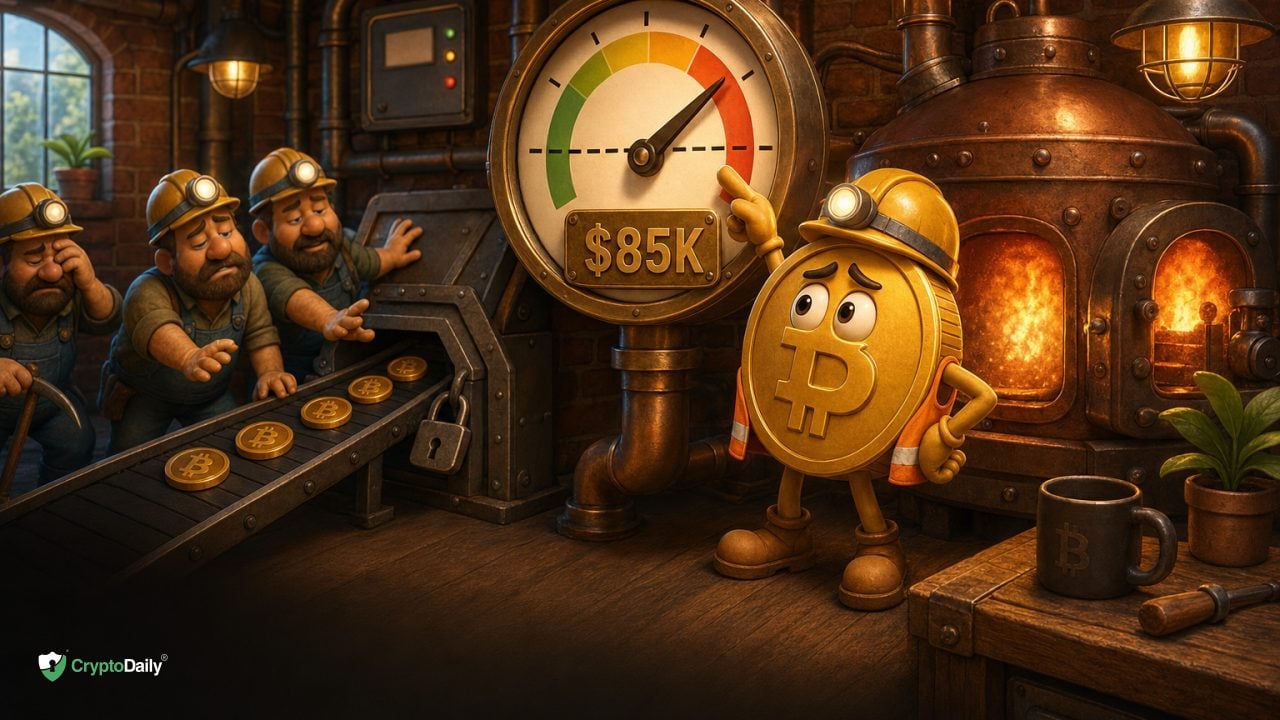
JPMorgan Says Bitcoin Above $85,000 Production Cost Could Ease Miner Selling

JPMorgan Says Bitcoin Above $85,000 Production Cost Could Ease Miner Selling

Bitcoin’s recent move above JPMorgan’s estimated average production cost of about $85,000 is relevant less as a standalone price signal than as a possible change in miners’ funding pressure. JPMorgan’s view is conditional: if Bitcoin remains above that level for long enough, miners may face less need to sell newly mined or treasury-held BTC. The estimate is a soft threshold, not an unbreakable market floor.

Bitcoin was around $84,187 when checked on September 25, slightly below the threshold after recently moving above it. A brief move above an average production-cost estimate does not automatically eliminate miner selling pressure or make every operation economical, since miner economics vary substantially by operator.

The practical question is therefore whether realised revenue stays high enough, for long enough, to affect equipment and financing decisions and the amount of BTC miners must sell to meet operating obligations.

The $85,000 threshold is a soft floor

JPMorgan described production cost as a “soft floor”, rather than a hard price floor. That framing is important. Mining does not stop across the network the instant BTC falls below an estimated average cost, nor do miners automatically become cash-generative the instant it rises back above one.

Instead, sustained sub-cost pricing tends to concentrate stress among operators with less efficient fleets, higher electricity costs, weaker access to capital or lower cash reserves. Those companies may sell Bitcoin to finance operations, turn off machines, or leave the market. The resulting reduction in network capacity can eventually lower competition for the remaining miners, but that adjustment is neither immediate nor uniform.

JPMorgan’s estimate therefore provides a useful sector-level reference point. It describes the broad economics confronting mining operators, not the exact break-even price for each business or each piece of hardware. Nor does it establish that BTC must trade at that price: market prices can remain below estimated production costs while miners absorb losses, use cash, sell inventory or reduce capacity.

A sustained recovery above the benchmark could ease those choices at the margin. It could mean fewer BTC sales by miners that had been using holdings as a source of liquidity, particularly if their operating costs are close to the sector average. But the word “sustained” carries most of the analytical weight. At $84,187 on September 25, Bitcoin remained just under the estimate that JPMorgan had identified as the relevant pressure point.

A 280-day sub-cost stretch has already driven capacity out

JPMorgan’s comparison is stark: Bitcoin prices had spent roughly 280 days below production cost, against about 224 days during the 2018 bear market.

The bank also cited a roughly 19% fall in hash rate from its October peak and a roughly 15% decline in mining difficulty. In its reading, some uneconomic capacity had already left the network.

Those figures describe a network that has begun to adjust before any sustained move above the roughly $85,000 production-cost estimate. When high-cost miners sell Bitcoin, shut equipment, or exit, lower capacity can reduce the computational burden for the operators still active and improve their marginal economics.

That is why the estimate functions as a soft floor rather than a hard stop. A recovery above it would arrive after an extended shakeout; lower hash rate can show both the discipline of the survivors and the extent of the capacity loss that preceded them.

Public-miner costs are not one number

CoinShares put publicly listed miners’ weighted-average cash cost at approximately $79,995 per BTC in the fourth quarter of 2025, close to JPMorgan’s $85,000 estimate. That makes JPMorgan’s figure a plausible broad sector benchmark for a sizeable share of listed mining capacity.

Costs vary widely by measure and operator. Riot Platforms reported a first-quarter 2026 cash cost excluding depreciation of $44,629 per BTC, while CoinShares estimated fourth-quarter 2025 all-in costs of $153,040 for MARA and $170,366 for Riot. Riot’s measure excludes depreciation, CoinShares’ figures are all-in estimates, and the reporting periods differ. The variation shows why an industry-wide production-cost estimate is not a company-specific profitability measure.

Miners’ cost structures and financial positions differ, so the data do not support treating every public miner as equally compelled to sell below $85,000 or equally relieved from selling above it. If Bitcoin remains above JPMorgan’s estimated average production cost, selling pressure may ease for miners closest to that margin, but sector-wide BTC sales would not necessarily cease and miners would not necessarily make identical treasury decisions.

Treasury depletion and AI revenue reshape the selling question

Mining economics are only part of the immediate selling calculation. CoinShares said publicly listed miners collectively reduced their BTC treasuries by more than 15,000 BTC from peak levels. It also estimated that roughly 15% to 20% of the global mining fleet was unprofitable at the reported hash price, according to its first-quarter 2026 mining report.

That combination limits the case for declaring a quick end to miner-related supply pressure. Treasury sales already made cannot be reversed by a modest price rebound, and the unprofitable portion of the fleet points to continuing strain somewhere in the network. A miner that has drawn down holdings during a 280-day sub-cost period may still prioritise liquidity even if spot BTC temporarily moves above an average cost estimate.

The sector’s move toward artificial intelligence and high-performance computing introduces a second complication. JPMorgan said miners are redirecting capacity toward AI revenue. In one direction, that can slow Bitcoin hash-rate growth because resources that might have supported mining are allocated elsewhere.

In the other direction, diversified revenue can reduce reliance on selling BTC to fund operations. For companies able to make that shift, the link between Bitcoin’s price and required treasury sales may become less direct, although the effect will depend on each operator’s exposure to those businesses and cannot be assumed across the sector.

JPMorgan’s $85,000 level is consequently best viewed as a conditional relief point after a lengthy industry adjustment. It identifies where aggregate economics may become less punitive. The extent to which that becomes lower BTC selling will be decided by uneven costs, the state of miners’ remaining treasuries and whether non-mining revenue is sufficiently material to change their cash needs.

Disclaimer: This article is provided for informational purposes only. It is not offered or intended to be used as legal, tax, investment, financial, or other advice.


* This article was originally published here

Saturday, October 10, 2026

Raiffeisen Expands Bitpanda Crypto Partnership Across Central and Eastern Europe

Raiffeisen Expands Bitpanda Crypto Partnership Across Central and Eastern Europe

On September 23, 2026, Raiffeisen Bank International (RBI) and Bitpanda agreed a group-wide framework for digital-asset services across RBI’s Central and Eastern European markets.

Bitpanda Enterprise will supply the underlying infrastructure for RBI network banks. Bitpanda said the arrangement could enable those banks to offer digital assets to approximately 18 million customers through a progressive, locally tailored rollout.

The framework expands on Bitpanda’s initial Austrian deployment, but availability will be determined market by market rather than launched across the group simultaneously.

Bitpanda Enterprise becomes RBI’s group-wide infrastructure provider

RBI and Bitpanda say Bitpanda Enterprise will provide the infrastructure for a group-wide framework that allows banks across RBI’s CEE network to offer digital-asset services.

The companies described a progressive, locally tailored rollout, with individual local banks determining implementation and offerings. Bitpanda’s announcement estimates the framework could reach approximately 18 million customers, a measure of potential network reach rather than immediate access for all customers.

RBI says it operates subsidiary banks in 11 CEE markets and serves 18.8 million customers through roughly 1,300 branches.

The expansion extends Raiffeisenlandesbank Niederösterreich-Wien’s 2024 model

The broader arrangement builds on a model already used by Raiffeisenlandesbank Niederösterreich-Wien, or RLB NÖ-Wien. That bank launched Bitpanda-powered crypto access within its existing banking environment in 2024.

That earlier launch matters because the new framework is an extension of a bank-integrated approach rather than a newly announced model without an existing deployment. Der Standard reported that the model is being extended gradually across RBI’s CEE subsidiaries.

The announcement hinges on a distinction between infrastructure and distribution: Bitpanda Enterprise is intended to provide the behind-the-scenes service, while RBI’s local banks retain the customer-facing role in markets where they elect to proceed.

Christian Trummer, Co-CEO of Bitpanda, and Michael Höllerer, CEO of Raiffeisen Bank International; photo by Sabine Klimpt. — Source: Bitpanda Group

Local RBI banks control the pace and product offering

The agreement creates a group-level route for expansion, not an immediate network-wide launch. Bitpanda describes a progressive, locally tailored rollout, with each RBI bank deciding whether to offer digital-asset services, when to do so, and which products to make available.

Customers in different RBI markets may consequently receive different access, timetables, and product ranges. The practical next step will be announcements from the relevant local bank.

Bitpanda’s infrastructure is intended to provide access through existing banking relationships, without a separate crypto account or application, according to its description of the framework.

Disclaimer: This article is provided for informational purposes only. It is not offered or intended to be used as legal, tax, investment, financial, or other advice.


* This article was originally published here

Friday, October 9, 2026

Cosmos Hub Restarts After Neutron Governance Attack, Moves 1.23M ATOM

Cosmos Hub Restarts After Neutron Governance Attack, Moves 1.23M ATOM

Cosmos Hub validators restarted the network at 12:00 UTC on September 23 after a roughly 24-hour, 48-minute halt, restoring block production and normal operations, according to the Cosmos Hub’s official X account mirror. The first post-restart block transferred 1,227,121.374688 ATOM from a wallet linked to the Neutron attacker to a newly created address without a transaction signed by the wallet owner, PrimeXBT reported. Cosmos Hub said its own network had not been exploited.

Validators restart Cosmos Hub after 24-hour, 48-minute halt

The restart ended an interruption that began in the wake of an attack involving Neutron’s governance process. The Hub’s update said validators had resumed producing blocks and that normal operations had returned.

The episode put Cosmos Hub validators at the centre of a response to an incident outside the Hub itself. The restart restored the chain’s operations, but the subsequent transfer made clear that the response also extended to assets associated with the alleged attacker.

First post-restart block transfers 1,227,121 ATOM

The first block produced after Cosmos Hub restarted included a transfer of 1,227,121.374688 ATOM—about 1.23 million ATOM—from a wallet linked to the Neutron attacker to an address created for the transfer.

PrimeXBT reported that the transaction did not include a signature from the wallet’s owner.

Neutron proposal compromised 11 Astroport and Drop-linked contracts

Approximately $9.4 million in assets were exposed or drained after an expedited Neutron governance proposal gave an attacker control over 11 contracts connected to Astroport and Drop, according to Unchained.

Cosmos Hub validators halted and later restarted the network during the response.

Cosmos Hub said it was not itself exploited and that the affected funds were limited to assets moved from Neutron. The incident was a Neutron-related governance attack rather than an exploit of Cosmos Hub itself.

Disclaimer: This article is provided for informational purposes only. It is not offered or intended to be used as legal, tax, investment, financial, or other advice.


* This article was originally published here

Thursday, October 8, 2026

KuMining Marks One Year With 200,000+ Users and Expansion Across Five PoW Assets

KuMining Marks One Year With 200,000+ Users and Expansion Across Five PoW Assets

The cloud mining platform records more than $25 million in sales and over 5 EH/s in cumulative BTC hashrate sales across retail and institutional clients 

KuMining, the cloud mining platform developed by KuCoin, has marked its first anniversary with more than $25 million in total sales volume, over 200,000 users and cumulative BTC hashrate sales exceeding 5 EH/s across retail and institutional clients.

One year after launching with Bitcoin mining and DOGE/LTC merged mining, KuMining now supports five Proof-of-Work assets: BTC, DOGE, LTC, ZEC and KAS. ZEC was added in July 2026, followed by KAS in August, expanding the range of mining options available through the platform.

KuMining provides access to computing power from physical mining rigs without requiring users to buy mining equipment or manage operations directly. The platform and its partners handle infrastructure including equipment, electricity, cooling and maintenance, while users purchase hashrate for a selected service period and receive output from the underlying mining activity.

The model is designed to provide both retail and institutional users with access to professionally operated mining infrastructure while simplifying the operational requirements typically associated with mining.

Alongside Bitcoin, DOGE/LTC merged mining remains a core part of the platform. The model uses the same computing power to mine both networks simultaneously, enabling users to receive mining output in DOGE and LTC without separately configuring equipment or mining pools.

Expanding Access to Managed Mining Infrastructure

KuMining introduced KuMining 2.0 in March 2026, adding more flexibility to how users purchase hashrate and manage mining activity.

Through Lite Mode, users select an asset, budget, and available service period, and the platform automatically matches the corresponding hashrate. Pro Mode gives users direct control over their selected hashrate and service period, with terms of up to 360 days depending on the asset.

Hashrate fees are paid upfront, while electricity charges are deducted daily in USDT through a dedicated Mining Account. The account provides records of daily and cumulative mining output, balances, electricity deductions and order history.

Mined assets are also held within the KuCoin ecosystem, where users can trade them or access eligible Earn services without first transferring assets between separate mining, wallet and exchange platforms.

As with other forms of Proof-of-Work mining, output can vary based on network conditions and equipment performance, while electricity costs and token prices can affect profitability. KuMining provides users with visibility into both mining output and associated electricity costs through the Mining Account.

More Than 200,000 Users in the First Year

According to company figures, KuMining served more than 200,000 users during its first year and recorded more than $25 million in total sales of its mining services.

Cumulative BTC hashrate sales exceeded 5 EH/s across retail and institutional segments over the same period.

The platform’s expansion from its initial BTC and DOGE/LTC offering to five supported assets reflects a broader range of hashrate services available to users without requiring them to purchase and operate mining hardware directly.

“Over the past year, we have focused on making mining more accessible through flexible hashrate services and clearer account management,” said Jolie Du, Chief Operating Officer of KuMining. “As we enter our second year, we will continue to strengthen our infrastructure and explore extending this service model to GPU and AI compute offerings.”

Anniversary Campaign Offers More Than 100,000 USDT in Rewards

To mark its first year, KuMining launched its “KuMining 1st Anniversary: Mine, Earn & Celebrate” campaign on September 22, 2026, with rewards worth more than 100,000 USDT.

The campaign includes rewards for new users and cumulative purchases, hashrate and electricity-fee coupons, and a guaranteed-prize draw. Eligible participants can receive draw entries by completing purchase and referral tasks.

Available prizes include USDT, BTC, KAS, ZEC, DOGE and LTC, alongside fee coupons and devices including an iPhone 18 Pro Max, Apple Watch Ultra 4 and AirPods Pro 3.

Eligibility requirements, task conditions, reward distribution and campaign duration are subject to the official campaign terms.

As KuMining enters its second year, the platform plans to continue developing its mining infrastructure while exploring how its managed service model could extend beyond Proof-of-Work mining into GPU and AI computing services.

Disclaimer: This article is provided for informational purposes only. It is not offered or intended to be used as legal, tax, investment, financial, or other advice.


* This article was originally published here

Wednesday, October 7, 2026

How a BTC to XMR Swap Works, From Deposit to Payout

How a BTC to XMR Swap Works, From Deposit to Payout

A BTC to XMR swap turns Bitcoin into Monero without an account on a trading platform. The process has four steps, and problems usually come from a small detail in one of them.

This walkthrough follows a single swap from the order form to the payout. It also notes what can go wrong along the way, and how to avoid it.

Key points

  • You need a Monero receiving address and BTC in a wallet you control.

  • Choose a floating rate that follows the market, or a fixed rate with a timer.

  • Send the exact amount in one transaction, with a normal network fee.

  • Keep the order ID. It is the reference for tracking and for support.

  • The Bitcoin payment stays visible on the Bitcoin chain. The Monero payout does not.

Before you start: an address and the coins

You need two things. The first is a Monero wallet with a receiving address. The official wallet from getmonero.org works, and so do other open-source wallets. A fresh subaddress, which starts with 8, keeps this payout apart from earlier ones.

The second is BTC in a wallet you control, or on a platform that lets you withdraw to any address. Your own wallet is the better option, because the fee setting and any refund stay in your hands.

HiddenSwap (hiddenswap.com) is a no KYC crypto exchange for crypto-to-crypto swaps: no account, no email and no ID are needed to swap. The steps below use its order flow as the example.

Before anything is sent, the BTC to XMR exchange page lists the live rate, the minimum and maximum amounts and the payout fee. Check it before you open the order form.

Steps 1 and 2: set up the BTC to XMR swap

Step 1 is the pair. Select BTC on the Bitcoin network as the coin to send and XMR as the coin to receive. Paste your Monero address, copied from your wallet, and check that its opening and closing characters match the ones in your wallet.

Step 2 is the rate. A floating rate is set at the moment the Bitcoin network confirms your deposit, so the XMR amount can rise or fall until then. A fixed rate keeps the quoted price, provided the exact amount lands in one transaction before the order timer ends.

A refund address for your BTC is optional, but useful. If the swap cannot finish, the coins go there instead of back to the address they came from. Use an address from a wallet you control, not a platform deposit address.

Step 3: send the exact BTC amount

The order page shows a deposit address made for this order and the exact amount to send. Pay that amount as one transaction. Splitting it, or reusing the address for a later swap, causes problems.

Set a normal network fee. New Bitcoin blocks are found roughly every 10 minutes, and a payment with a low fee can sit unconfirmed through many of them. On a fixed rate, a slow deposit can miss the timer.

This payment is public. Bitcoin transactions stay visible on the Bitcoin chain, including the amount and the addresses. The privacy of this swap begins with the Monero you receive.

If you send from a platform account, check that it sends the full amount after its own withdrawal fee. Some platforms take the fee out of the amount you enter, and the deposit then arrives short.

Step 4: track the order and receive the XMR

Keep the order ID shown on the order page. It lets you reopen the page to follow the swap, and support needs nothing else to find it.

The page shows each stage: the deposit, the confirmations, the swap and the payout. When the payout is sent, the XMR appears in your wallet after it syncs. Monero locks newly received coins for 10 blocks, around 20 minutes, before they can be spent.

HiddenSwap shows a time estimate for each pair in the swap form, but the real time depends on the Bitcoin network. No one can promise an exact finish time for a swap.

What can go wrong, and how to avoid it

A low network fee is a common cause of delay. The deposit waits in the mempool until miners include it, and a fixed-rate timer can expire meanwhile. The normal fee setting in your wallet avoids most of this.

A different amount is the second issue. The result varies with the rate type and with the minimum for the pair, and the HiddenSwap FAQ covers each case. Sending the exact amount avoids the question.

The market can also move. On a fixed rate, a price move of 3% or more before your BTC confirms can mean a choice between a new rate and a refund.

A wrong payout address is the hardest problem to fix. Monero payments cannot be reversed, so compare the address with your wallet once more before you create the order.

Frequently asked questions

Do I need an account or an email?

No. The swap needs the pair, the amount and your XMR address. The order ID takes the place of a login.

What if my Bitcoin payment is stuck?

Wait for it to confirm, or raise the fee if your wallet supports fee bumping. Never pay the same deposit address a second time. If a fixed-rate timer runs out, contact support with the order ID.

Is the XMR payout private?

Yes. Once the XMR is in your wallet, later payments with it keep the payer, the payee and the amount private by default. The BTC deposit before it stays visible on the Bitcoin chain.

With the address checked and the fee set right, moving from Bitcoin to Monero is a short, clear process.

Disclaimer: This article is provided for informational purposes only. It is not offered or intended to be used as legal, tax, investment, financial, or other advice.


* This article was originally published here

Tuesday, October 6, 2026

Bitcoin Approaches Key Higher High: Can It Break the Bear Market?

Bitcoin Approaches Key Higher High: Can It Break the Bear Market?

The Bitcoin price is only a matter of $1,000 or so from surpassing a key macro high that would be a huge step towards changing the macro trend from bearish to bullish. Could the price explode to the upside once this higher high is achieved?

$BTC price moves up out of parallel channel

Source: TradingView

The short-term 4-hour chart reveals that the $BTC price is creeping steadily towards the prize of that key higher high at around $82,820. The price has left the top of the parallel channel, and this time around, there looks to be plenty of momentum to take the price past that key higher high.

Even just taking into account the measured move out of the channel, this would take the $BTC price to $87,000 should it completely play out. We also have no little matter of a bull flag, the measured move of which could take the price up to the wonderful round figure of $100,000.

Breaking the bear market, then ending it

Source: TradingView

In the daily chart we can see the two big bear flags that accounted for most of the downside in the bear market. The last higher high for each bear flag have now become key targets for this as yet unconfirmed bull market. 

The $BTC price is currently approaching the previous bear flag top. If a higher high can be put in here, this could break the back of the bear market. Given that the price is currently issuing from the top of a bull flag, the upside momentum and the measured move could then take the price beyond the next bear flag top - officially ending the bear market and confirming the new.

At the bottom of the chart, the RSI indicator line has crossed up through the small downtrend, signalling that the bulls are back in charge. Look for a break and then a confirmation of the key 70.00 limit, which would mean the price is going higher still.

$BTC price makes key higher high

Source: TradingView

As can be seen in the weekly chart, in the last few minutes the $BTC price shot up and beyond the key higher high, getting to just above $84,000 so far. This is excellent news for the bulls. Depending on the depth of buying interest behind this move, the price will either go to $85K - $87K, with the possibility of $90K, or will come back to test the higher high or perhaps the top of the channel before going higher again.

The bottom of the chart gives another very positive view of the RSI. The indicator line has broken up through a trendline that started back in March 2024. The next step, if the $BTC price is to continue moving up, is to make a higher high. This would entail the indicator line getting above the 70.00 level.

Disclaimer: This article is provided for informational purposes only. It is not offered or intended to be used as legal, tax, investment, financial, or other advice.


* This article was originally published here

Bitcoin Pulls Back, but Falling Oil and Yields Could Help

The Bitcoin price failed to break out once again and suffered a dip on Tuesday, pulling back 3.5% - equivalent to around $3,000. Oil rose ...