Cryptocurrency Tips

💰 Want to Profit from Cryptocurrency Tips Like the Pros?
👉 Discover the strategy that helped early adopters multiply their earnings.

Friday, November 14, 2025

Crypto Price Analysis 11-3: BITCOIN: BTC, ETHEREUM: ETH, SOLANA: SOL, INTERNET COMPUTER: ICP, UNISWAP: UNI

Crypto Price Analysis 11-3: BITCOIN: BTC, ETHEREUM: ETH, SOLANA: SOL, INTERNET COMPUTER: ICP, UNISWAP: UNI

The cryptocurrency market has started the new month in bearish territory as Bitcoin (BTC), Ethereum (ETH), and other tokens trade in the red. As a result, the crypto market cap is down nearly 3% at $3.61 trillion. BTC traded above $110,000 over the weekend as volatility dissipated. However, selling pressure returned on Monday as the flagship cryptocurrency fell below $110,000. BTC is down over 2% in the past 24 hours, trading around $107,761, with sellers in control. 

ETH has followed a similar trajectory after holding steady around the $3,900 mark over the weekend, falling to a low of $3,721 on Monday. The world’s second-largest cryptocurrency is down nearly 4% over the past 24 hours, trading around $3,739. Ripple (XRP) is down almost 3%, while Solana (SOL) is down nearly 5%, trading around $177. Dogecoin (DOGE) and Cardano (ADA) are both down over 6%, while Chainlink (LINK) is down 5.50%, trading around $16.24. Stellar (XLM), Hedera (HBAR), Litecoin (LTC), Toncoin (TON), and Polkadot (DOT) have also registered substantial declines over the past 24 hours. 

Crypto Market Sentiment Rooted In “Fear” Territory 

The Crypto Fear & Greed Index, a metric that measures overall crypto market sentiment, posted a “Fear” score of 37 on Sunday, up 4 points from Saturday. The increase came as the White House released a comprehensive statement outlining the agreement between the US and China. The White House statement noted, 

“A massive victory that safeguards US economic strength and national security while putting American workers, farmers, and families first.”

US-China relations have been closely watched by the crypto community, with tariffs often being linked to major developments in the cryptocurrency market. The Crypto Fear & Greed Index recorded a major jump after President Trump announced a 90-day pause of reciprocal tariffs in April. More recently, the threat of 100% tariffs on China was held responsible for the October 10 market crash, with over $19 billion liquidated in just over 24 hours. The market has been struggling to recover since, with Bitcoin (BTC) slipping below key levels, and starting the ongoing week below $110,000. 

Coinbase Close To BVNK Acquisition 

Coinbase is reportedly close to completing the acquisition of stablecoin infrastructure startup BVNK in a $2 billion deal, according to sources familiar with the matter. The cryptocurrency exchange is continuing its stablecoin push following the passage of key legislation in the US. Market watchers believe the acquisition will be completed by the end of the year or early 2026. Coinbase’s stablecoin push could bring in additional revenue for the exchange, lessening its reliance on trading fees to generate profits. Around 20% of Coinbase’s revenue came from stablecoins during the third quarter of 2025. 

ARK Invest Expands Bullish Bet 

Cathie Wood’s ARK Invest has doubled down on its Bullish bet after the exchange went public on the New York Stock Exchange (NYSE) under the BLSH ticker, purchasing over $5 million worth of shares across multiple ETFs. According to trade disclosures, ARK Innovation ETF (ARKK) bought 72,537 Bullish shares, while ARK Next Generation Internet ETF (ARKW) purchased 21,354, and ARK Fintech Innovation ETF (ARKF) purchased 11,122 shares. ARK Invest initially invested $8.27 million in Bullish shares in mid-October through two of its funds, and has continued investing since the exchange’s NYSE debut. 

Bitcoin (BTC) Price Analysis

Bitcoin (BTC) has started November deep in the red, with the price down nearly 3% during the ongoing session. The flagship cryptocurrency entered the weekend on a positive note, reaching an intraday high of $111,066 on Friday before settling at $109,555. Price action remained positive on Saturday and Sunday as BTC rose 0.45’% and 0.44% to end the weekend at $110,536. However, selling pressure has returned during the ongoing session, with the price at $107,472. 

The flagship cryptocurrency briefly crossed $111,000 on Sunday, trading in positive territory over the weekend. However, traders were unsure about the weekend uptick despite the likes of Binance and Coinbase bidding on BTC. However, analysts noted that the trend contrasted what was noticed during the week. Crypto investor and entrepreneur Ted Pillows implied that the weekend upside would not hold once the TradFi markets resume on Monday. 

“Binance and Coinbase are bidding on $BTC now. I would really appreciate it if they would bid on weekdays too. Another Sunday pump, and we know how this ends.”

Another analyst stated that BTC’s Sunday gains could top out at $114,000. 

“If that’s going to happen, then due to the nature of Sunday, prices can easily tag 113k and 114k going into Monday, but have low conviction in this.”

Trader and analyst Rekt Capital noted that BTC must reclaim the 21-week exponential moving average (EMA). 

“Bitcoin is not too far away from reclaiming the 21-week EMA (green) for a successful post-breakout retest.”

BTC’s “Uptober” streak finally ended as it ended the month in the red for the first time since October 2018. The flagship cryptocurrency ended the month down between 3.5% and 4%, catching even seasoned traders off guard. Market analysts attribute the disappointing performance to the October 10 market crash, which led to over $19 billion in liquidations in 24 hours. BTC has struggled to recover since and traded below the $115,000 level. Selling pressure has intensified in recent sessions, with the price dipping below $110,000. 

President Trump’s threats to restrict key software imports and impose 100% tariffs on Chinese imports intensified the ongoing trade war between the US and China, spooking an already jittery market. The Federal Reserve’s delay in implementing additional rate cuts has also weakened investor sentiment. Adam McCarthy, Senior Analyst at Kaiko, stated, 

“Even top coins like Bitcoin and Ether can experience 10% drawdowns in minutes. October’s drop was a sharp reminder of how narrow and volatile this market remains.”

BTC started the previous weekend on a bullish note, rising 0.84% on Friday and 0.56% on Saturday to settle at $111,666. Bullish sentiment intensified on Sunday as the flagship cryptocurrency rose nearly 3% to cross $114,000 and settle at $114,548. BTC reached an intraday high of $116,410 on Monday. However, it lost momentum after reaching this level and settled at $114,087, ultimately dropping 0.40%. Selling pressure and volatility persisted on Tuesday as the price fell 1.03% to $112,906. Bearish sentiment intensified on Wednesday as BTC fell 2.55% and settled at $110.032.

Source: TradingView

Volatility and selling pressure persisted on Thursday as BTC reached an intraday high of $111,629, fell to an intraday low of $106,279, and settled at $108,308. Despite the overwhelming selling pressure, BTC returned to positive territory on Friday, rising 1.15% and settling at $108,555. Price action remained positive over the weekend, with BTC increasing 0.45% on Saturday and 0.44% on Sunday to settle at $110,536. However, selling pressure has intensified during the ongoing session, with the price down nearly 3% at $107,357. The MACD and RSI also indicate that sellers have the upper hand.

Ethereum (ETH) Price Analysis

Ethereum (ETH) has registered a sharp jump during the ongoing session, down over 5% at $3,714. The world’s second-largest cryptocurrency traded in positive territory over the weekend, rising 1.14% on Friday and 0.67% on Saturday. Buyers retained control on Sunday as the price rose 0.87% and settled at $3,908 before dropping during the current session.

ETH’s decline came as markets became cautious ahead of US Jobs Data, due later this week, and comments by Treasury Secretary Scott Bessent, who suggested that high interest rates are beginning to strain the economy. Bessent stated during an interview that the Federal Reserve’s restrictive policies “may have driven parts of the economy, particularly housing, into recession.” He urged the Federal Reserve to cut interest rates, adding that keeping borrowing costs high could risk economic pressure, especially for leveraged households. The crypto market responded positively to Bessent’s remarks, but gains faded as traders debated whether cuts driven by slowing economic activity could spur near-term volatility.

Despite ETH’s latest decline, its tightening structure indicates strong potential for an upward price swing. According to analysts, a break above $4,000 would validate bullish predictions. However, a dip towards $3,500 could see short-term weakness. However, analysts believe ETH’s major support level at $3,500 remains intact.

Meanwhile, the total monthly stablecoin volume on Ethereum reached a new all-time high in October as traders sought yield-bearing opportunities during the market slowdown. According to the available data, stablecoins on Ethereum registered $2.82 trillion in on-chain volume, far more than their previous all-time high of $1.94 trillion in September. Circle’s USDC registered $1.62 trillion in monthly volume, followed by USDT, which registered $895.5 billion.

ETH started the previous weekend in positive territory, rising over 2% on Friday and settling at $3,935. The price rose 0.45% on Saturday and rallied over 5% on Sunday to cross $4,000, settling at $4,157. ETH reached an intraday high of $4,266 on Monday. However, it lost momentum after reaching this level and dropped 0.87% to $4,120. Selling pressure intensified on Tuesday as the price fell 3.37%, slipping below $4,000 to $3,982. Sellers retained control on Wednesday as ETH dropped 1.92% and settled at $3,905.

Source: TradingView

Bearish sentiment intensified on Thursday as ETH fell nearly 3% to a low of $3,682 before reclaiming $3,800 and settling at $3,805. Despite the overwhelming selling pressure, the price recovered on Friday, rising 1.14% to $3,848. Price action remained positive over the weekend as ETH rose 0.67% on Saturday and 0.87% on Sunday to settle at $3,908. However, selling pressure has returned during the ongoing session, with the price down nearly 5% trading around $3,711. 

Solana (SOL) Price Analysis 

Solana (SOL) is down over 6% during the ongoing session as the cryptocurrency market starts the week in bearish territory. The altcoin struggled to build momentum over the weekend, rising 1.34% on Friday before dropping 0.45% on Saturday and settling at $186. The price recovered on Sunday, increasing 0.76% to end the weekend at $187. 

Meanwhile, Solana ETFs continue to garner investor interest, recording the fourth consecutive day of inflows as traders rotate capital from BTC and ETH funds. According to SoSoValue data, spot Solana ETFs registered $44.48 million in inflows on Friday, taking cumulative inflows to $199 million and total assets to over $500 million, with the Bitwise Solana ETF (BSOL) leading the inflows. 

In comparison, spot Bitcoin ETFs registered $191.6 million in net outflows on Friday as investors continued taking profits. Bitcoin ETFs saw $470 million in outflows on Wednesday and $488 million on Thursday. Meanwhile, spot Ethereum ETFs saw $98.2 million in net outflows on Friday. 

According to analysts, Solana ETF momentum can be attributed to capital rotation as market appetite for crypto investment products grows. Vincent Liu, Chief Investment Officer at Kronos Research, stated, 

“Solana ETFs are surging on fresh catalysts and capital rotation, as Bitcoin and Ether see profit-taking after strong runs. The shift signals rising appetite for new narratives and staking-driven yield opportunities. Solana momentum may extend next week, with rotation staying alive while majors pause, unless macro news sparks extreme volatility.”

Solana (SOL) rose 1.18% on Friday (October 24) and settled at $193. Price action remained positive over the weekend as SOL registered a marginal increase on Saturday before rallying over 3% on Sunday to reclaim $200. The altcoin reached an intraday high of $205 on Monday as bullish sentiment intensified. However, it lost momentum after reaching this level and fell 0.65% to $198. Sellers retained control on Tuesday as the price dropped by over 2% and settled at $194. SOL faced volatility on Wednesday as buyers and sellers struggled to establish control. Sellers ultimately gained the upper hand as the price registered a marginal decline.

Source: TradingView

Bearish sentiment intensified on Thursday as SOL fell nearly 5% and settled at $184. Despite the overwhelming selling pressure, the price recovered on Friday, rising 1.34% and settling at $187. Price action was mixed over the weekend as SOL registered a marginal drop on Saturday before rising 0.76% on Sunday and settling at $187. Bearish sentiment has returned during the ongoing session, with SOL down nearly 7%, trading around $175.

Internet Computer (ICP) Price Analysis

Internet Computer (ICP) registered a 3.62% increase on Friday (October 24) and settled at $3.15. Price action was mixed over the weekend as ICP fell 0.95% on Saturday before rising nearly 6% on Sunday and settling at $3.30. Selling pressure returned on Monday as the price dropped almost 4% and settled at $3.17. Sellers retained control on Tuesday as ICP fell 2.52% to $3.09. Price action remained bearish on Wednesday and fell 1.29% to $3.05.

Source: TradingView

Selling pressure intensified on Thursday as ICP fell over 5%, slipping below $3 and settling at $2.89. Despite the overwhelming selling pressure, ICP recovered on Friday, rising almost 2% and settling at $2.94. Bullish sentiment returned over the weekend as ICP rallied, rising over 17% on Saturday and over 24% on Sunday to cross $4 and settle at $4.28. However, selling pressure has returned during the ongoing session, with the price down over 11% at $3.79.

Uniswap (UNI) Price Analysis

Uniswap (UNI) has struggled to regain momentum over the past few sessions. As a result, the altcoin’s price has fallen below key levels. UNI is down over 8% during the ongoing session, trading around $5.385.

UNI started the previous weekend in the red, dropping 0.98% to $6.249. The price registered a marginal drop on Saturday before rallying on Sunday, rising nearly 7% and settling at $6.665. However, it was back in the red on Monday, dropping over 2% to $6.513. Sellers retained control on Tuesday as the price fell nearly 3% and settled at $6.341. Selling pressure persisted on Wednesday as UNI fell almost 1% to $6.341.

Source: TradingView

Bearish sentiment intensified on Thursday as UNI fell over 7%, slipping below $6 to $5.844. The price continued declining on Friday, dropping 1.71% and settling at $5.744. UNI recovered over the weekend despite overwhelming selling pressure, rising 2.04% on Saturday and registering a marginal increase on Sunday to settle at $5.860. Bearish sentiment has returned during the ongoing session, with the price down over 7% at $5.427.

Disclaimer: This article is provided for informational purposes only. It is not offered or intended to be used as legal, tax, investment, financial, or other advice.


* This article was originally published here

Thursday, November 13, 2025

The Most Anticipated BNB Launch of 2025: $BALZ Brings the Meme Migration Home

The Most Anticipated BNB Launch of 2025: $BALZ Brings the Meme Migration Home

Singapore, Singapore, October 31st, 2025, Chainwire

The Binance Smart Chain (BNB) network has seen renewed activity, and BALZ has emerged as one of its notable community movements, with over 40,000 active members before launch on X (@_BALZ_). Observers regard it as one of the more anticipated community-driven launches of the year, comparable to projects such as Aster and Four.meme.

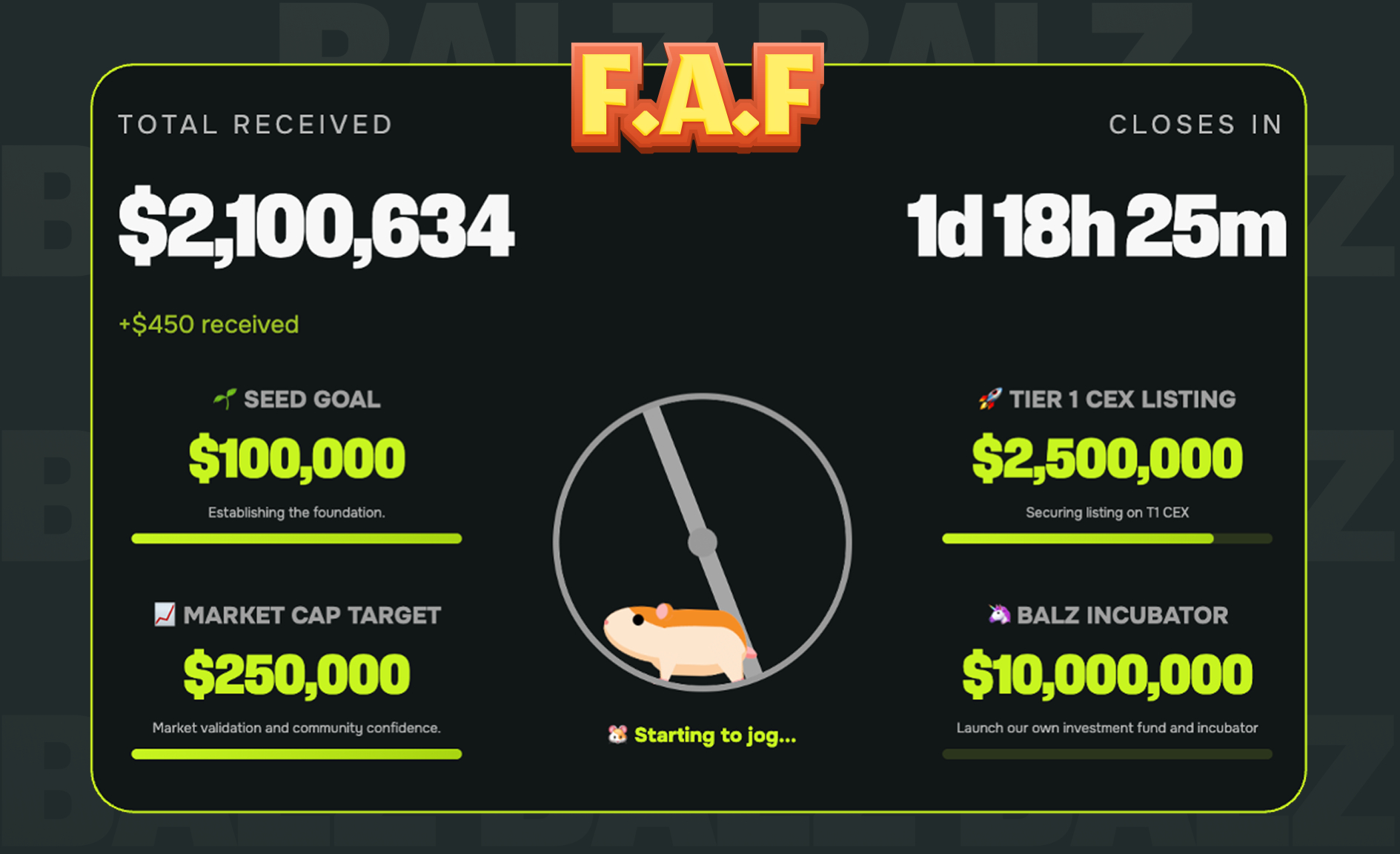
Raising over $2 million within days of opening, BALZ has positioned itself as a significant project developing on BNB, despite its informal branding and memetic culture. With more than 40,000 members prior to its anticipated token presale, the project has adopted an unconventional approach to community growth through guerrilla marketing and its "rug pull recovery protocol."

Instead of allocating capital to influencer campaigns, the team integrated communities from Solana and Base, migrating them to BNB through its protocol. At the time of writing, more than 10,000 verified holders are in the process of migration.

The Token Presale: Closing Tonight, October 31st at 23:59 PDT

At the center of BALZ is the Fair-As-F* Launch (FAF), a limited-time token presale closing on October 31 at 23:59 PDT. Within days of opening, BALZ raised over $2 million, drawing parallels to earlier community-led launches such as Shiba Inu and Floki in 2020.

FAF is structured with a fixed price and specific time frame, allowing equal participation without insider advantages or automated trading. In a market that has frequently favored early access and automation, BALZ seeks to show that fairness can be built into its design.

BNB Market Conditions and Timing

The timing aligns with a significant shift in the cryptocurrency market. On October 10, 2025, the sector experienced its largest liquidation event to date, with $19 billion eliminated within 48 hours as Bitcoin declined from $126,000 to $105,000. This event represented market deleveraging rather than capitulation.

Key outcomes include:

  • Open interest decreased from $48.7 billion to $45.1 billion
  • Funding rates fell by 51 percent
  • Overleveraged positions were cleared

The result is a market now characterized by conviction-based participants and institutional capital seeking new deployment opportunities.

Market structure mirrors 2020-2021 exactly:

  • Bitcoin ETFs pulled in $2.71 billion during October 6-10, BlackRock's IBIT holding $65.26 billion
  • 85% of institutional firms now allocate to digital assets
  • Fed rate cuts hit 93% probability for next quarter

BNB Smart Chain Shows Continued Growth

  • 3.62 million daily active addresses in October 2025
  • Total Value Locked surged 217% to $17.1 billion
  • 70% of BNB meme traders are currently profitable

CZ is back. He changed his X profile from "ex-@binance" to "@binance" in September 2025. BNB hit an all-time high of $1,311. Real infrastructure that actually supports growth. BNB is where smart money is rotating.

BALZ is capturing this momentum at the exact moment Solana and Base communities are looking for an exit. Market observers note the project is one CZ tweet away from a billion-dollar market cap, similar to previous meme token cycles where single endorsements rapidly accelerated valuations into nine-figure territory.

The presale window closes October 31st at 23:59 PDT.

Interested parties can join the Fair-As-F Launch:* https://faf.balz.fun/

Follow: X: @_BALZ_ | Telegram: t.me/BALZ_Official

About BALZ

BALZ is a meme coin launching on Binance Smart Chain with a mission: to build the safest, fastest trading platform and no-code launchpad in crypto. Led by a doxxed team and powered by 40,000+ active members.

ContactJosh GierBALZ INCcontact@balz.fun

Disclaimer: This is a sponsored press release and is for informational purposes only. It does not reflect the views of Crypto Daily, nor is it intended to be used as legal, tax, investment, or financial advice.


* This article was originally published here

Wednesday, November 12, 2025

What’s Next in the March Towards Mainstream Crypto Adoption?

What’s Next in the March Towards Mainstream Crypto Adoption?

Crypto adoption has soared in recent years, a consequence of maturing technology and a brightening regulatory landscape. From retail traders and institutions to merchants and everyday consumers, the switch from crypto-curious to crypto connoisseur has been hard to ignore.

With that said, it’s important to withdraw from the echo chamber once in a while to assess just how widespread adoption is – as well as to ponder the industry’s key drivers and direction of travel. Just as one gets an inaccurate picture of public sentiment from inhabiting a social media bubble, the same is true of the cryptosphere.

So, where are we headed? And how far away is true mainstream adoption?

A Feel-Good Factor

There’s no better jumping-off point to consider this topic than the latest Crypto Adoption and Stablecoin Usage Report, which evaluated digital asset adoption throughout the world during the first half of 2025.

According to the report, US crypto activity surged by 50% between January and July compared to the same period last year, while adoption has also accelerated in key markets like South Asia and North Africa. Moreover, stablecoins have recorded their highest annual volume, reaching over $4 trillion for the year to date.

While the credit cannot be laid at one door, the signing into law of both the GENIUS and Clarity Acts has boosted the confidence of financial institutions and large corporations where blockchain and crypto are concerned. The ripple effect of these laws is being felt far and wide; the fact that we are still in a bull market only amplifies the feel-good factor.

Aside from the introduction of a comprehensive US regulatory framework, the maturation of institutional-grade digital asset infrastructure has also convinced many formerly wary entities to dip their toes in the space. This is reflected by the activity of such companies: institutional infrastructure platform Hercle, for example, recently announced $60 million in new capital, while another infrastructure provider, Taurus, expanded into the US for the first time.

According to the aforementioned report, while DeFi activity previously represented a large share of the index, more structured service providers and institutional participants (attracted by regulated products like spot BTC/ETH ETFs) have begun to influence transaction patterns. Or to put it another way, we aren’t in Kansas anymore.

What’s Here and What’s Coming

Most ordinary people don’t pay much attention to what institutions are doing. But developments on the ground are also catching the eye. Take the recent partnership between Concordium and Bitcoin.com, which enables privacy-preserving age-verified payments for over 60 million wallet holders. Or the fact that stablecoins are increasingly being used by businesses for operational and payroll needs.

The cultural impact of Web3 technology is also undeniable. NFL Rivals, an officially licensed mobile sports game that features non-fungible tokens (NFTs) and is powered by a blockchain-based economy, has racked up over 7 million downloads. Some of the world’s biggest sports teams – including Paris Saint-Germain and Barcelona – have also launched their own fan tokens, enabling supporters to invest in their success.

The logical question to ask, of course, is which drivers will provoke the next major wave of adoption?

“The next phase of meaningful adoption in crypto will not come from new protocols, but from improving how users access the system,” predicts Lingling Jiang, Partner at market maker DWF Labs. “Unless fiat on- and off-ramps are seamless, compliant, and trusted, participation will remain fragmented. These ramps are not just technical tools – they determine how capital enters and exits the ecosystem, and how long it stays.

“For institutional investors, the first questions are often simple: how do I enter, and how do I exit without friction? Everything else depends on solving that access point.”

Where ramps are concerned, the news that Western Union will next year launch its own stablecoin (USDPT) and network is likely to be welcomed by many. Per the announcement, the company is teaming up with wallets and wallet providers to grant customers seamless access to cash on/off-ramps through stablecoins. 

In a conversation with Bloomberg, CEO Devin McGranahan praised stables for their ability to slash costs and reduce friction in international remittances.

Elsewhere, London-based stablecoin clearing startup Uxyk is on a mission to enable anyone, anywhere, to deposit stablecoins into existing bank and fintech accounts. Talk about tearing down the barriers between Web2 and Web3! If the banks are able to accept and redeem stablecoins (and not just those backed by USD), the game will be completely changed.

The Next Billion

There are already over half a billion crypto users, but ‘onboarding the next billion’ remains the stated goal of many Web3 companies. While none of them are likely to achieve it single-handedly, a collective effort – to abstract complexity, inspire trust, tighten security, and boost retention – will likely make this objective a reality. Here’s to the next wave of killer apps, protocols, and platforms. 

Disclaimer: This article is provided for informational purposes only. It is not offered or intended to be used as legal, tax, investment, financial, or other advice.


* This article was originally published here
Tuesday, November 11, 2025

Crypto Price Analysis 10-29: BITCOIN: BTC, ETHEREUM: ETH, SOLANA: SOL, FILECOIN: FIL, INJECTIVE: INJ

Crypto Price Analysis 10-29: BITCOIN: BTC, ETHEREUM: ETH, SOLANA: SOL, FILECOIN: FIL, INJECTIVE: INJ

The cryptocurrency market fell over 1% in the past 24 hours as bearish sentiment persisted despite positive macroeconomic developments. Markets also experienced volatility ahead of the upcoming FOMC meeting as traders remain cautious. As a result, Bitcoin (BTC), Ethereum (ETH), and other cryptocurrencies remained in the red. BTC traded around $116,000 on Tuesday. However, it lost momentum early on Wednesday and dropped to a low of $112,255 before moving to its current level. BTC is down 1% in the past 24 hours, trading around $112,844. 

Meanwhile, ETH is down over 2%, trading around $4,016. The world’s second-largest cryptocurrency has struggled to retain momentum with selling pressure returning after it briefly crossed $4,150 on Wednesday. Ripple (XRP) is down 0.50%, while Solana (SOL) is down over 3%, trading around $194. Dogecoin (DOGE) is down 3% and Cardano (ADA) is down 2.35%, trading around $0.643. Chainlink (LINK), Stellar (XLM), Hedera (HBAR), Litecoin (LTC), Toncoin (TON), and Polkadot (DOT) also registered substantial declines over the past 24 hours.

France Considering Proposal to Adopt Bitcoin (BTC) And Stablecoins 

France is reviewing a proposal to adopt Bitcoin (BTC) and stablecoins while rejecting the European Central Bank’s digital euro. According to a motion led by Éric Ciotti from the Union of the Right for the Republic, France could allocate 2% of its reserves, around $48 billion, to BTC. The motion also recommends allowing cryptocurrencies, such as BTC, to be used as institutional collateral and revising EU financial regulations to support broader cryptocurrency integration. 

“A pro-crypto bill will be tabled today in the French Parliament. This is the first time such a comprehensive text on the subject has been proposed in France.”

If the proposal is approved, France would become the first European nation to formally endorse and approve a Bitcoin reserve. The motion is also a sign of rising political support for BTC. 

US Stocks Rally Ahead Of Fed Rate Cut Decision 

Wall Street was in good spirits on Tuesday as the Dow Jones Industrial Average rose by over 150 points, while the S&P 500 and Nasdaq soared to record levels, thanks to a Microsoft-OpenAI deal. The Federal Reserve’s decision on interest rate cuts is expected today, pushing investor sentiment into positive territory. As a result, the Dow Jones Industrial Average rose 150 points while the benchmark S&P 500 rose 0.4% and the tech-heavy Nasdaq Composite rose 0.8%. The gains are thanks to a positive reaction to a potential US-China trade deal, with Wall Street stocks also inching towards another bullish close. 

Nvidia, Apple, and Microsoft traded in positive territory as positive market sentiment pushed the three major indexes towards record highs. The three tech giants also reported key developments, with Nvidia's Chief Executive Officer Jensen Huang highlighting a “turning a corner” outlook for the company. A $1 billion stake in Nokia also boosted intraday gains. Microsoft shares also rose 2% as the market responded positively to a deal between Microsoft and OpenAI. Apple shares also rose, pushing the iPhone maker past the $4 trillion market valuation mark. 

Western Union Taps Solana For Stablecoin, Crypto Network 

Western Union has chosen the Solana blockchain for its upcoming stablecoin settlement system. Solana announced the company’s third-quarter earnings call last week, adding that the stablecoin system will comprise the US Dollar Payment Token (USDPT) and the Digital Asset Network, built in partnership with Anchorage Digital Bank. Western Union expects USDPT to launch in the first half of 2026, providing customer access through partner exchanges to increase accessibility. Western Union added that the Digital Asset Network will act as a cash off-ramp for the platform’s over 150 million customers across 200 countries. Western Union CEO Devin McGranahan said his team explored several alternatives before settling on the Solana blockchain. 

“For 175 years, we've been connecting people, moving $150 billion a year. Digital assets are the next evolution. We looked at alternatives and concluded that Solana was the right choice.”

Bitcoin (BTC) Price Analysis 

Bitcoin (BTC) fell back into bearish territory after failing to claim $116,000 on Tuesday. The flagship cryptocurrency ended the weekend in positive territory, reaching an intraday high of $115,410 on Monday. However, it could not stay at this level and settled at $113,833, ultimately dropping 0.40%. BTC rallied to an intraday high of $116,114 on Tuesday but lost momentum again, ultimately dropping 1.03% and settling at $112,906. 

Analysts believe BTC’s see-saw price action will continue until the Federal Reserve FOMC meeting and the US-China trade deal are concluded. Price action is showing strength, but BTC’s bullish reversal will be confirmed only if it registers daily closes above the $116,000 level. While BTC is struggling to claim the $116,000 level, there are other positive signs. Open interest (OI) has recovered, rising to $31.48 billion from a low of $28.11 billion on October 11. Spot Bitcoin ETF inflows have also returned, recording over $260 million in net inflows over the past three trading sessions. 

According to data from SoSoValue, Bitcoin ETFs posted $202 million in net inflows, with only three ETFs posting significant gains. Ark & 21Shares ARKB reported $75.84 million, while Fidelity FBTC reported $67.05 million. BlackRock’s IBIT registered the smallest inflow on the day with $59.60 million. 

According to data from Hyblock, large investors (1 million to 10 million) are continuing to sell, while retail investors (1,000-10,000) are buying the dips. Traders are also reducing their exposure ahead of Wednesday’s FOMC meeting. The Federal Reserve is widely expected to announce a 25 bps rate cut following the meeting. While the FOMC meeting is expected to generate a bullish outcome, President Donald Trump’s meeting with Chinese President Xi Jinping could have a significant impact on market sentiment. If the talks between the two leaders break down, or the market perceives the trade deal as unfavorable, it could send prices and investor sentiment hurtling into bearish territory. Analysts have stated that until the US-China trade deal and the FOMC meeting are concluded, BTC will continue trading between $110,000 and $116,000. 

Meanwhile, one market expert has warned investors of difficult times, predicting that BTC could drop to $70,000 once the bear market kicks in. Jon Glover, Chief Investment Officer at Ledn, believes the bull market, which began in early 2023, could be on its last legs. 

“I firmly believe we have completed the five-wave upward move and are now entering a bear market that may last until at least late 2026. I expect bitcoin to trade between $70K and $80K, and possibly even lower.”

BTC ended the previous weekend in positive territory, rising 1.37% on Sunday and settling at $108,676. Buyers retained control on Monday as the price rose nearly 2% to reclaim $110,000 and settle at $110,568. BTC surged to an intraday high of $114,082 on Tuesday. However, it lost momentum after reaching this level and dropped 1.99% to $108,362. Selling pressure persisted on Wednesday as BTC fell 0.72% to a low of $106,639 before settling at $107,585. Despite the selling pressure, the price recovered on Thursday, rising over 2% to cross $110,000 and settle at $110,116. BTC continued pushing higher on Friday, rising almost 1% to $111,042.

Source: TradingView

Price action remained positive over the weekend, with BTC rising 0.56% on Saturday and settling at $111,666. Bullish sentiment intensified on Sunday thanks to positive macroeconomic developments, including positive trade talks between the US and China, and rising odds of a rate cut. As a result, BTC rose 2.58% to cross $114,000 and settle at $114,548. The flagship cryptocurrency reached an intraday high of $116,410 on Monday. However, it lost momentum after reaching this level and settled at 114,087, ultimately dropping 0.40%. BTC rallied to an intraday high of $116,114 on Tuesday as bullish sentiment persisted. However, it lost momentum again and dropped over 1% to $112,906. The flagship cryptocurrency is up 0.50% during the ongoing session, trading around $113,453. 

Ethereum (ETH) Price Analysis 

Ethereum (ETH) has slipped below $4,000 as market sentiment turns cautious ahead of the FOMC meeting later today. The world’s second-largest cryptocurrency ended the weekend in positive territory, rising over 5% to $4,157. The price reached an intraday high of $4,266 on Monday but lost momentum after this level, ultimately dropping 0.87% to $4,120. Selling pressure intensified on Tuesday as ETH fell over 3% and settled at $3,982. The price is up almost 1% during the ongoing session, trading around $4,019. 

Despite recent price struggles, spot Ethereum ETFs registered inflows of over $246 million. Fidelity’s FETH led the inflows with $99.27 million, while BlackRock’s ETHA reported $76.37 million in inflows, and Grayscale’s ETH registered $73 million in inflows. Grayscale’s ETHE was the only ETF to report outflows, with $2.66 million withdrawn. Total trading volume for the ETFs reached $1.64 billion, with the value of net assets reaching $27.66 billion. 

Meanwhile, Ethereum is gearing up for the Fusaka upgrade, which recently went live on the Hoodi testnet. Fusaka is set to launch on the mainnet on December 3 and will add several scalability and security upgrades to the network. Nethermind, a validator client, completed the upgrade and posted on X, 

“The Ethereum Hoodi Fork has been completed and is now running seamlessly on the Nethermind Client. Another smooth upgrade, another key milestone on the road to Fusaka. Big thanks to everyone in the ecosystem who helped make it happen - from client teams to researchers and operators.”

Fusaka will implement several Ethereum Improvement Proposals, including Peer Data Availability Sampling (PeerDAS) as outlined in EIP-7594. The improvement allows validators to read smaller pieces of data on the network, improving node efficiency. The update also includes EIP-7825 and EIP-7935, which aim to raise gas limits and improve efficiency as Ethereum prepares for parallel execution. 

ETH started the previous weekend in the red, dropping 1.57% to a low of $3,680 before settling at $3,834. The price recovered over the weekend, rising 1.51% on Saturday and 2.39% on Sunday to settle at $3,985. ETH faced volatility on Monday as buyers and sellers struggled to establish control. Sellers ultimately gained the upper hand as the price registered a marginal decline and settled at $3,981. Selling pressure intensified on Tuesday as ETH fell almost 3% to $3,876. The price fell to an intraday low of $3,709 on Wednesday. However, it rebounded from this level and settled at $3,807, ultimately dropping 1.78%.

Source: TradingView

Despite the overwhelming selling pressure, ETH recovered on Thursday, rising 1.33% and settling at $3,857. The price continued pushing higher on Friday, rising 1.33% and settling at $3,935. Price action remained positive over the weekend as ETH rose 0.45% on Saturday and 5% on Sunday, reclaiming $4,000 and settling at $4,157. ETH reached an intraday high of $4,266 on Monday as positive sentiment persisted. However, it lost momentum after reaching this level and settled at $4,120, ultimately dropping almost 1%. Selling pressure intensified on Tuesday as the price fell over 3%, slipping below $4,000 and settling at $3,982. ETH has reclaimed $4,000 during the ongoing session and is trading around $4,018.

Solana (SOL) Price Analysis

Solana’s (SOL) move above $200 fizzled out on Tuesday as it lost momentum after reaching an intraday high of $203. The altcoin registered a sharp increase on Sunday, reaching an intraday high of $205 before sellers drove the price down to $198. Selling pressure and volatility persisted on Tuesday as SOL fell over 2% and settled at $194. The price is marginally up during the ongoing session, trading around $194.

Meanwhile, asset manager Bitwise has revealed that its Solana staking ETF registered $55.4 million in trading volume on its debut day. The trading volumes recorded on the Bitwise Solana Staking ETF (BSOL) were the largest among all crypto ETFs launched in 2025, beating XRP and SOL staking ETFs from REX Osprey. BSOL registered $223 million in assets before its launch, indicating growing institutional support and confidence in staking rewards. Wall Street has expanded its appetite for crypto beyond BTC and ETH, with altcoins like SOL taking center stage.

BSOL’s $55.4 million in trading volume beat pre-launch expectations of $52 million. Meanwhile, Canary Capital’s HBAR ETF (HBR) recorded $8 million in trading volume on its debut.

SOL started the previous weekend in the red, dropping to an intraday low of $174 before settling at $182. The price recovered on Saturday, rising over 3% to $187, and registered a marginal increase on Sunday despite volatility and selling pressure to settle at $188. Buyers retained control on Monday as SOL rose 0.95% to $189. The price reached an intraday high of $197 on Tuesday. However, it lost momentum after reaching this level and dropped by over $2% to $185. Selling pressure persisted on Wednesday as SOL fell over 3% and settled at $180.

Source: TradingView

Despite the overwhelming selling pressure, SOL rallied on Thursday, rising over 6% to reclaim $190 and settle at $191. Buyers retained control on Friday as the price rose 1.16% to $193. Price action remained positive over the weekend as SOL registered a marginal increase on Saturday before rising 3% on Sunday and claiming $200. SOL reached an intraday high of $205 on Monday but lost momentum after reaching this level. As a result, it fell below $200 and settled at $198. Selling pressure and volatility persisted on Tuesday as SOL fell over 3% to $194. The altcoin is marginally up during the ongoing session as it looks to reclaim $200.

Filecoin (FIL) Price Analysis

Filecoin (FIL) ended the previous weekend in positive territory, rising 2.47% and settling at $1.533. Buyers retained control on Monday as the price rose over 3% and settled at $1.581. FIL rallied to an intraday high of $1.730 on Tuesday as bullish sentiment intensified. However, it lost momentum after reaching this level and settled at $1.563, ultimately dropping over 1%. Selling pressure persisted on Wednesday as FIL fell nearly 3% to an intraday low of $1.461 before settling at $1.519. Positive sentiment returned on Thursday as the price rose 2.57% to $1.569. FIL continued pushing higher on Friday, rising 0.71% and settling at $1.569.

Source: TradingView

Price action was mixed over the weekend as FIL registered a marginal decline on Saturday before rising nearly 6% on Sunday and settling at $1.652. The price lost momentum on Monday and fell 0.73% to $1.640. Selling pressure intensified on Tuesday as FIL fell 5% and settled at 1.558. The price is up over 1% during the ongoing session, trading around $1.578.

Injective (INJ) Price Analysis

Injective (INJ) registered a notable increase of almost 2% on Sunday (October 19) and moved to $8.581. The price continued pushing higher on Monday, rising 1.97% and settling at $8.750. Selling pressure returned on Tuesday as INJ fell 3% to $8.487. Bearish sentiment persisted on Wednesday as INJ fell 3.50%, settling at $8.191. Despite the overwhelming selling pressure, the price recovered on Friday, rising almost 3% to $8.408. Buyers retained control on Friday as INJ rose 0.89% and settled at $8.483.

Source: TradingView

Price action was mixed over the weekend as INJ fell 0.93% on Saturday before rising 7% on Sunday, and settling at $9.020. Selling pressure returned on Monday as the price dropped almost 5% to $8.595. Sellers retained control on Tuesday as the price fell 2.38% and settled at $8.390. INJ is marginally down during the ongoing session, trading around $8.381.

Disclaimer: This article is provided for informational purposes only. It is not offered or intended to be used as legal, tax, investment, financial, or other advice.


* This article was originally published here

Monday, November 10, 2025

LBank Launches Halloween Series Event to Blend Festive Fun with Crypto Innovation

LBank Launches Halloween Series Event to Blend Festive Fun with Crypto Innovation

Singapore, Singapore, October 28th, 2025, Chainwire

LBank, a leading global digital asset trading platform, has launched its Halloween Series Event. The campaign features the long-term social media segment CandyVerse with $5,000 prize pools. Additionally, it includes a Halloween-themed Twitter Space and interactive activities across global communities.

To boost engagement and festive fun, LBank will launch CandyVerse during Halloween, partnering with projects like Slerf and BRETT to offer rewards. Users can earn prizes through social media tasks and airdrops, with a total pool of $5,000. CandyVerse showcases LBank’s innovation in long-term user rewards and social media engagement.

Additionally, LBank will host a Halloween Twitter Space Party on October 31, themed “Haunting the Crypto Night.” Guests will share insights on their projects, market trends, and industry perspectives while engaging in live discussions with the community. At the same time, global communities will run “Halloween Carnival” events, where users can complete missions, play games, and earn festive rewards.

Beyond the festive fun and rewards, the Halloween Series is strategically important. By linking social media and community activities, LBank strengthens user engagement, brand innovation, and its position in the global digital asset market.

“Halloween is the perfect time for creativity and surprise,” said Eric He, LBank’s Community Angel Officer & Risk Control Advisor. “Through CandyVerse, Twitter Space, and community activities, users can fully experience LBank’s innovative ecosystem and enjoy engaging, fun, and valuable interactions.”

LBank has continuously explored new ways to engage the crypto community. For its 10th anniversary, it distributed over $50 million in airdrops, offering users generous rewards and innovative experiences. Going forward, LBank will keep connecting projects with users through global events, strengthening co-creation and community ties.

About LBank

Founded in 2015, LBank is a leading global cryptocurrency exchange serving over 20 million registered users in 160 countries and regions. With a daily trading volume exceeding $10.5 billion and 10 years of safety with zero security incidents, LBank is dedicated to providing a comprehensive and user-friendly trading experience. Through innovative trading solutions, the platform has enabled users to achieve average returns of over 130% on newly listed assets.

As the ultimate 100x Gems Hub, LBank has listed over 300 mainstream coins and more than 50 high-potential gems. Ranked No. 1 in 100x Gems, Highest Gains, and Meme Share, LBank leads the market with the fastest altcoin listings, unmatched liquidity, and industry-first trading guarantees, making it the go-to platform for crypto investors worldwide.

Users can follow LBank for Updates

Website: https://www.lbank.com/

Twitter: https://twitter.com/LBank_Exchange

Telegram: https://t.me/LBank_en

Instagram: https://www.instagram.com/lbank_exchange

LinkedIn: https://www.linkedin.com/company/lbank

ContactPR & Communications TeamLBankpress@lbank.com

Disclaimer: This is a sponsored press release and is for informational purposes only. It does not reflect the views of Crypto Daily, nor is it intended to be used as legal, tax, investment, or financial advice.


* This article was originally published here

Sunday, November 9, 2025

Latest XRP News: XRP Tundra Presale Introduces Breakthrough Staking Platform

Latest XRP News: XRP Tundra Presale Introduces Breakthrough Staking Platform

XRP has long been one of crypto’s most liquid assets — but until recently, it lacked a true staking economy. Centralized exchanges have offered “staking” products for years, yet those yields come from internal lending pools, not from genuine protocol participation. That distinction is now drawing attention as XRP Tundra’s Cryo Vault system prepares to launch, promising real staking yields secured by audited contracts and a dual-chain architecture built across the XRP Ledger and Solana.

In Phase 8 of its presale, TUNDRA-S trades at $0.132 with a 12 % bonus, while the reference price of TUNDRA-X sits at $0.066. Confirmed listing prices — $2.5 and $1.25 respectively — outline a fixed upside before staking begins. With $2 million + raised and audits from Cyberscope, Solidproof, and FreshCoins already complete, the foundation for a legitimate high-yield ecosystem is in place.

Staking Redefined: How Cryo Vaults Fit the Tundra Ecosystem

XRP Tundra’s staking system — the Cryo Vaults — will allow holders of TUNDRA-S to lock tokens and earn periodic rewards denominated partly in TUNDRA-X. Instead of a single-chain validator model, Cryo Vaults merge Solana’s high-speed architecture with XRPL’s transaction stability.

Yield is tied to ecosystem activity: transaction fees, liquidity pool revenue, and platform participation feed into staking payouts. Because rewards come from measurable network behavior rather than token inflation, the result is sustainable high yield rather than the fleeting APRs common in unaudited presales.

Each vault tier will feature defined lock periods — short-term (7 days), medium (30 days), and extended (60–90 days) — designed to balance flexibility and reward. Early participants who secure allocations in the presale gain automatic eligibility for Cryo Vault access once the platform launches.

Dual-Token Architecture Powers Real Yield

The dual-token model sits at the heart of this system.

  • TUNDRA-S (Solana) – Utility and staking token. Generates rewards and supports liquidity operations.

  • TUNDRA-X (XRP Ledger) – Governance and reserve token. Distributes voting rights and represents protocol reserves.

Every presale purchase delivers both tokens — a single transaction that doubles participation across two ecosystems. When staking activates, TUNDRA-S will generate rewards derived from network activity, and part of those rewards will be delivered in TUNDRA-X, giving users not just income but governance exposure.

That combination distinguishes Tundra from centralized alternatives, where staking means depositing tokens with a custodian who redistributes yield from trading fees or lending. In Cryo Vaults, tokens remain under smart-contract custody — transparent, auditable, and linked directly to network performance.

How “CEX Staking” Differs from Real Staking

Most investors staking XRP today do so on centralized exchanges such as Binance, KuCoin, or Bitrue. However, XRP’s consensus protocol means these programs are technically lending or yield-sharing, not staking.

Here’s a comparison:

Platform / Method

Network Basis

Yield Type

Typical APY

Custody

Risk Profile

Binance “XRP Staking”

Internal lending

Platform-paid rewards

1 – 4 %

Custodial (CEX holds XRP)

Centralized; no on-chain proof

KuCoin Earn (Flexible XRP)

Lending pool

Variable interest

2 – 5 %

Custodial

Dependent on platform solvency

Bitrue Power Piggy

Exchange revenue share

Floating

Up to 5 %

Custodial

Unverified sources

On-Chain Validator Delegation (XRPL testnets)

Limited pilot, not mainnet

Network incentives

< 1 %

Non-custodial

Early-stage, experimental

XRP Tundra Cryo Vaults (TUNDRA-S)

Dual-chain staking (Solana + XRPL)

Verified on-chain yield from ecosystem fees

Up to 30 % projected APY *

Smart-contract (non-custodial)

Audited by Cyberscope, Solidproof, FreshCoins + KYC certificate

*Projected yield range based on modelled fee distribution; final APY depends on platform activity after launch.

Unlike CEX programs, Tundra’s yield is not a marketing rebate — it’s a structural function of the ecosystem. Rewards flow from liquidity fees generated via the DAMM V2 pools on Solana and validator activity anchored on XRPL.

Verified Security and Institutional Confidence

Staking implies lock-ups; therefore, security verification matters more than marketing. XRP Tundra completed three independent audits before listing, covering smart-contract integrity, liquidity locks, and minting permissions. Reports from Cyberscope, Solidproof, and FreshCoins found no critical vulnerabilities, while team verification was issued through Vital Block KYC.

This level of documentation — typically reserved for post-launch platforms — gives both retail and institutional participants confidence to lock capital for long-term yield. Permanent liquidity locks guarantee baseline tradability, and dynamic fees in DAMM V2 pools prevent early dumping by making short-term exits costly and unprofitable.

Such structure translates directly into staking performance: the more stable the liquidity, the more consistent the yield pipeline. It’s a model rarely available at presale pricing, one reason institutional wallets have already been spotted accumulating allocations ahead of the Cryo Vault rollout.

XRP Staking Enters a New Era

Early participants in XRP Tundra’s presale gain first access to the network’s Cryo Vaults, the on-chain system that will distribute staking rewards after launch. Only verified wallets from the presale phase will qualify for the top-yield tiers, projected to reach around 30% APY. This phase therefore defines who can participate in the initial reward cycle once the platform activates.

For long-term XRP holders accustomed to limited passive-income options, XRP Tundra’s dual-chain model marks the first audited, non-custodial staking solution tied directly to the XRP Ledger. With audits live, bonuses active, and liquidity already configured, the system offers a rare high-yield environment that functions more like a fund than a presale.

Join thousands of explorers preparing for Cryo Vault activation: lock in your Phase 8 allocation and stake across the XRP Ledger and Solana once live.

Website: https://www.xrptundra.com/

Medium: https://medium.com/@xrptundra

Telegram: https://t.me/xrptundra

X: https://x.com/XrptundraContact: Tim Fénix — contact@xrptundra.com

Disclaimer: This is a sponsored article and is for informational purposes only. It does not reflect the views of Crypto Daily, nor is it intended to be used as legal, tax, investment, or financial advice.


* This article was originally published here

Saturday, November 8, 2025

Crypto Circles Heat Up Over Zero Knowledge Proof (ZKP) Whitelist! Who Gets In First Could Change Everything

Crypto Circles Heat Up Over Zero Knowledge Proof (ZKP) Whitelist! Who Gets In First Could Change Everything

The Zero Knowledge Proof (ZKP) blockchain has started to capture the attention of analysts and community members alike, as early discussions around its whitelist phase continue to build. Positioned among the top crypto presales to watch, the project has emerged as one of the more intriguing names in the decentralized AI and blockchain intersection. Its focus on verifiable computation, privacy preservation, and scalable distributed infrastructure has set it apart within a space dominated by speculative narratives.

Interest in the Zero Knowledge Proof (ZKP) ecosystem has grown due to its attempt to solve the long-standing challenges of computational bottlenecks, data privacy, and trust in AI systems. Its dual-consensus model and emphasis on secure data exchange have made it a central point of conversation for those seeking the next 100x crypto presale. As the whitelist draws closer, discussions around its technological direction and potential real-world use cases are driving anticipation across crypto circles.

A Framework Centered on Verifiable Compute

The foundation of the Zero Knowledge Proof (ZKP) ecosystem rests on its ability to distribute AI workloads efficiently through verifiable computation. Instead of depending on centralized servers or cloud infrastructures, the network leverages a globally distributed array of nodes that collectively process AI-related tasks. This method enables more balanced resource utilization while maintaining transparency in performance validation.

Each participating node provides verifiable proof of its computational work through the Proof of Intelligence mechanism. This ensures that every contribution to the network is measurable, which helps build an accountable and performance-based ecosystem. Analysts have highlighted this design as one of the reasons the project has started gaining traction ahead of its whitelist phase.

The inclusion of the Proof of Space mechanism adds another dimension to its system integrity. By utilizing storage commitments, it ensures data reliability and security while distributing the responsibility of maintaining network integrity across participants. Together, these mechanisms underpin the structure that has helped the Zero Knowledge Proof (ZKP) crypto project stand out as a top crypto presale to watch among early blockchain observers.

Built on Privacy, Defined by Trust

One of the major points driving discussions around the Zero Knowledge Proof (ZKP) blockchain is its privacy-focused architecture. The ecosystem integrates cryptographic methods that allow computations to be verified without exposing sensitive information. This ensures that proprietary data, models, and algorithms can remain confidential, even while being processed across decentralized systems.

This feature is particularly relevant in the current environment, where concerns around AI transparency and data misuse continue to grow. The approach proposed by the Zero Knowledge Proof (ZKP) framework allows for collaboration and validation without compromising user trust. The concept of privacy-preserving computation has been repeatedly cited as one of the most significant differentiators of the project.

As interest around the upcoming whitelist grows, discussions have also centered on how ZKP’s focus on privacy could shape the broader utility of decentralized AI systems. The integration of privacy with verifiable compute makes the project attractive to both investors and developers seeking to participate in something beyond conventional blockchain infrastructure. With these characteristics, the project’s potential as a next 100x crypto presale continues to be a topic of debate across online communities.

Conversations Grow Around the Upcoming Whitelist Phase

The prelaunch excitement surrounding the Zero Knowledge Proof (ZKP) whitelist has become a focal point of analyst coverage. Market watchers note that the combination of AI compute distribution and cryptographic validation has helped build momentum even before formal presale stages begin. Conversations around participation have increased across social platforms, with many recognizing the project as one of the top crypto presales to watch.

A central theme in these discussions is how the ecosystem promotes fairness in participation. By allowing nodes to demonstrate both computational and storage capacity, the project fosters an inclusive structure that rewards real contributions. This meritocratic design has been viewed as a step forward for projects that aim to balance decentralization with verifiable performance.

Adding to this anticipation is the concept of a decentralized marketplace within the ecosystem. This marketplace is intended to allow participants to share or monetize AI models and datasets securely. It’s seen as a potential driver of value for both small and large contributors, creating a fairer digital economy built around transparency and verified exchange. This has been one of the key reasons the upcoming whitelist event has continued to gain attention from those monitoring top upcoming presale opportunities.

The project’s conceptual strength also lies in its positioning at the convergence of blockchain and AI infrastructure. It speaks to an audience beyond typical presale participants, attracting those who view decentralized AI as a key direction for technological growth. This multi-dimensional appeal has made the Zero Knowledge Proof (ZKP) blockchain one of the more talked-about initiatives in prelaunch conversations.

Closing Analysis

As anticipation mounts for the Zero Knowledge Proof (ZKP) whitelist, the ecosystem’s framework continues to gain recognition across the crypto space. Its dual-consensus model and commitment to privacy-preserving compute are establishing it as a distinctive entrant within the decentralized AI narrative.

With a growing number of analysts referring to it as a next 100x crypto presale, the Zero Knowledge Proof (ZKP) project stands at the intersection of innovation, utility, and decentralization. While still in its prelaunch phase, discussions around its upcoming whitelist indicate a steadily increasing level of confidence among communities seeking the top crypto presale to watch in the evolving AI blockchain space.

Find Out More At:

https://zkp.com/

Disclaimer: This is a sponsored article and is for informational purposes only. It does not reflect the views of Crypto Daily, nor is it intended to be used as legal, tax, investment, or financial advice.


* This article was originally published here

Why AI Agents Need Crypto to Transact

* This article was originally published here