Cryptocurrency Tips

💰 Want to Profit from Cryptocurrency Tips Like the Pros?
👉 Discover the strategy that helped early adopters multiply their earnings.

Sunday, June 30, 2024

Blockchain Basics: Understanding RPC & REST APIs

Blockchain Basics: Understanding RPC & REST APIs

Blockchain developers have to make all kinds of decisions when considering the infrastructure and tooling they use, and one of the most crucial regards their choice of API model. 

Communication protocols are crucial for blockchain nodes to interact with one another, so they can transmit information, validate and process transactions in concert. Most developers rely on a combination of protocols including TCP/IP, HTTP WebSocket, and either Remote Procedure Call (RPC) or Representational State Transfer (REST) APIs.

Differences Between RPC & REST

The choice of RPC or REST API is one of the key considerations that blockchain developers must weigh up, prior to getting started on building any decentralized application. RPC enables clients to directly invoke functions or procedures on a remote server, while REST utilizes stateless communication via HTTP methods including DELETE, GET, POST and PUT. Whereas RPC provides a procedural approach to API calls, REST is more resource-oriented. As such, RPC is considered to be more tightly coupled, supporting direct function calls, while REST emphasizes looser coupling and higher scalability. 

RPC APIs have become widely used by blockchain developers as they enable programs to execute code on remote systems. This means blockchain nodes can communicate in a more seamless way, streamlining interactions across the network. 

As such, RPC is often the API of choice for tasks such as querying blockchain data, submitting transactions and network node management. Developers can choose from a wide range of RPC libraries and APIs that allow them to interact with nodes in a programmatic way, supporting tight integration with external systems and automation. 

On the other hand, REST's resource-oriented architecture and stateless communication model can support simpler and more scalable communications between blockchain nodes. RESTful blockchain infrastructures expose resources such as transactions, smart contracts and blocks as uniform resource identifiers or URIs, and perform interactions using standard HTTP procedures. 

With REST APIs, developers can take advantage of a more standardized and modular way of accessing blockchain data, which may make it easier to build some kinds of decentralized applications. REST APIs also simplify the process of integrating blockchains into existing apps. 

RPC vs REST: Considerations For Blockchain

Developer's choice of API is usually based on their performance, compatibility and security requirements, as well as the user experience they're looking for. In general, the consensus among developers is that RPC APIs facilitate direct invocation of functions and support more efficient data serialization, making it more performant overall. On the other hand, REST APIs offer a standardized, and therefore simpler approach that can usually scale more efficiently. 

Performance considerations including throughput, latency and resource utilization are key because every blockchain transaction needs to be processed quickly and verified accurately. RPC comes out on top, with its direct communication model translating to higher throughput and lower latency in most use cases, especially for dApps that must process real-time interactions and frequent method calls. 

Thanks to its standardized HTTP protocols, REST offers wider compatibility with a more diverse set of programming languages and computing platforms. This can make it a better option for dApps that require multi-language support. 

Strong security is another essential requirement for blockchain communications, which frequently transfers and processes sensitive information and valuable digital assets. The main considerations here include encryption, data integrity, authentication and authorization. RPC APIs often utilize authentication mechanisms such as API Keys or basic access authentication, while REST APIs are reliant on token-based authentication procedures. 

Which API Is Best?

Ultimately, the choice between RPC and REST APIs depends on the project's requirements and any constraints the developer may face. For dApps that demand real-time interactions, low-latency transactions and tight coupling with existing systems, RPC is usually the preferred choice. But if broader compatibility and interoperability are paramount, then REST's more standardized architecture may be more suitable. 

At the end of the day, the choice of API is a trade-off between performance, security, compatibility and the developer experience. Developers therefore need to evaluate the requirements and constraints of their project in order to decide whether RPC or REST is preferable. 

Disclaimer: This article is provided for informational purposes only. It is not offered or intended to be used as legal, tax, investment, financial, or other advice.


* This article was originally published here

Saturday, June 29, 2024

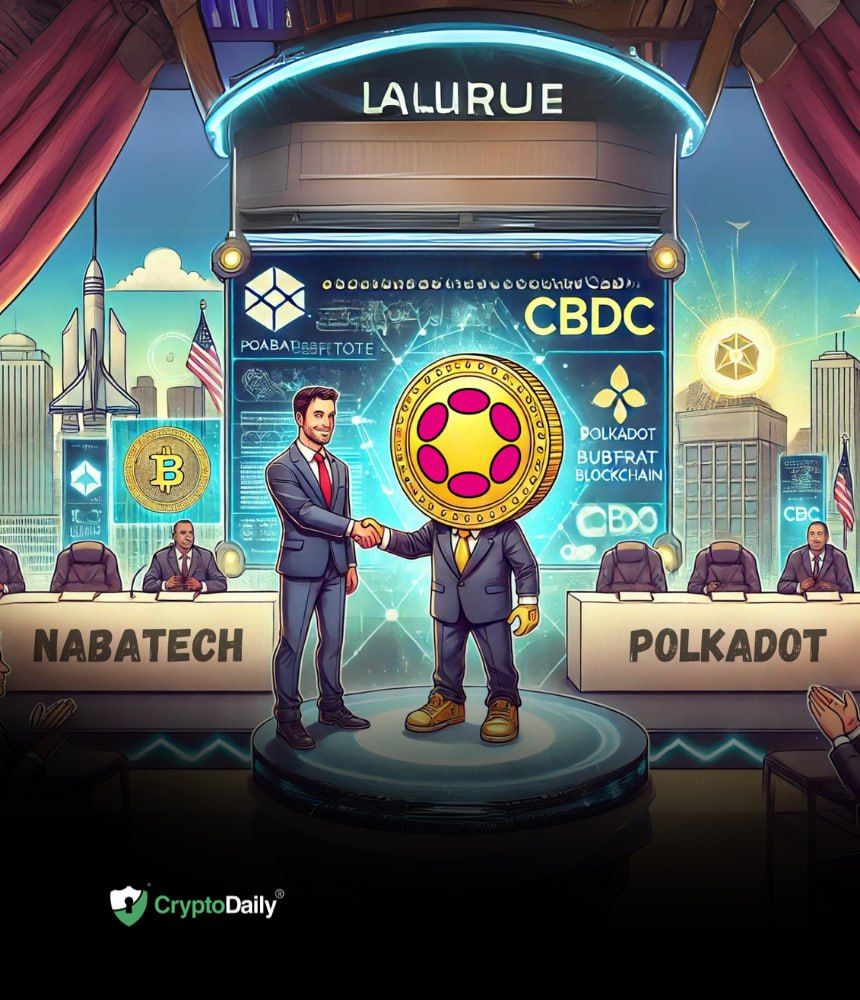
Nabatech To Build CBDC Solutions On Polkadot’s Substrate Blockchain

Nabatech To Build CBDC Solutions On Polkadot’s Substrate Blockchain

Nabatech, a Swiss digital asset specialist, has selected Polkadot’s Substrate blockchain to build its digital asset platform for central banks and financial institutions. 

The decision to go with Polkadot’s Substrate framework was made after a thorough analysis of seven potential platforms. 

Nabatech Taps Substrate

Nabatach is a joint venture between SICPA, a cash cycle expert for several of the world’s central banks and sovereign states, and INX, a real-world asset tokenization platform regulated in the US by the Securities and Exchange Commission (SEC) and FINRA. Its goal is to support central banks in tokenizing assets such as central bank digital currencies (CBDCs), digital bonds, and stablecoins. 

Before selecting Polkadot’s Substrate, Nabatech evaluated several blockchains for its regulated digital asset platform, including Ethereum Hyperledger Fabric, Cosmos, and Polygon. The blockchains were assessed on several criteria, such as Sybil resistance, coding language, runtime, security, governance, interoperability, and business process integration. After assessing all the blockchains, Substrate emerged as the top choice for Nabatech. Speaking about the selection process, Nabatech CTO Paz Diamant stated, 

“After conducting a deep technical analysis of blockchains with multiple economy and technology experts, we were attracted to Substrate’s flexible and modular design. Its framework can be quickly adjusted to suit any business or technical requirement, flexibly, without compromising on security or scalability.”

The system is already being used as a sandbox for central banks to provide infrastructure solutions. It can also help boost currency supply, lifecycle, transfer and settlements, and sovereign compliance optimization. 

The Benefits Of Substrate

Central banks and other premier financial institutions require a high level of security and stability. Substrate-based networks are able to benefit from strong cryptography and a host of other features that can defend against common attack vectors. Standout features of Substrate include support for retail and wholesale transactions that involve CBDCs. Substrate also expands the utilization of a modular structure that allows central banks to select the solution foundation best suited for their monetary policy and financial strategy. 

Substrate’s flexibility also allows central banks to start with wholesale and end with retail CBDCs, depending on their preferences. 

Central Banks Pushing For CBDCs

Several central banks around the world are mulling the development of central bank digital currencies. The Republic of Rwanda recently revealed plans to create its own CBDC within two years. Rwanda’s CBDC aims to improve its financial system and offer citizens a safe and convenient alternative to physical cash. The country also hopes to bring more people into the financial system through CBDCs. 

Ripple CEO Brad Garlinghouse has also announced partnerships with nearly ten governments to help develop their CBDCs. The partnership will allow the governments to use Ripple’s blockchain technology to update their financial systems.

Disclaimer: This article is provided for informational purposes only. It is not offered or intended to be used as legal, tax, investment, financial, or other advice.


* This article was originally published here
Thursday, June 27, 2024

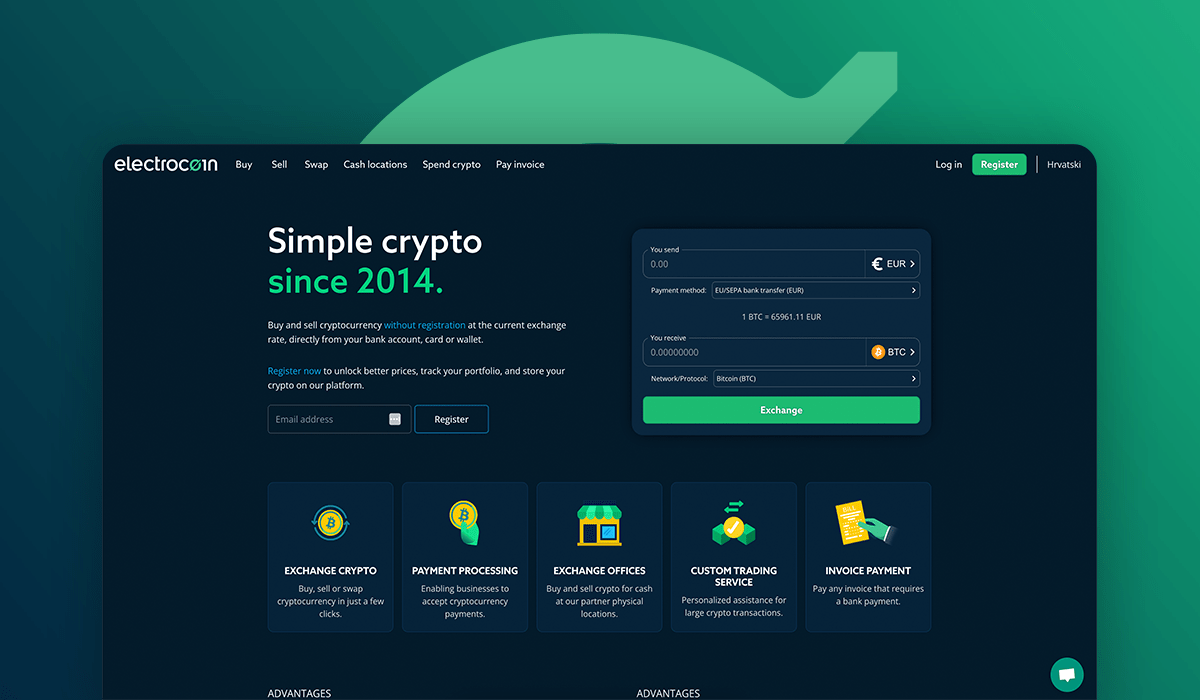
Electrocoin launches its new cryptocurrency exchange platform, Electrocoin Trade

Electrocoin launches its new cryptocurrency exchange platform, Electrocoin Trade

One of the biggest cryptocurrency exchange services in Croatia, Electrocoin, has recently launched their new cryptocurrency exchange platform called Electrocoin Trade, providing services for natural and legal clients in the EU.

The platform includes two core services - cryptocurrency exchange and trading service without prior registration to the platform, and cryptocurrency exchange and trading service for registered users. This way, and following the recent regulatory development in the area of crypto regulation, Electrocoin introduced the new custodial model to their service, allowing them to act as a custodian for the assets clients chose to hold on their Electrocoin Trade accounts. By registering with Electrocoin Trade, users get to entrust their cryptocurrencies for safekeeping to a highly regulated platform, as they also get access to additional trading and user experience benefits such as lower trading fees and cryptocurrency portfolio monitoring.

Regardless of the new service, Electrocoin decided to keep the old service as well - any adult citizen in the EU can buy, sell, or trade cryptocurrencies up to 1000 euros without verification or prior registration on the platform. This way, Electrocoin wanted to ensure their existing and future users had an option where they could still access crypto even if they would rather not register with the new platform. This service is possible due to regulatory approval for KYC-less money exchange under certain thresholds.

The platform supports cross-chain transfers and coin-to-coin swaps through a variety of protocols, including ERC-20, Polygon, BEP-20, and many more. Furthermore, with the release of the new platform, Electrocoin has also introduced one new service - paying bills with cryptocurrencies. Users of the platform can use their cryptocurrencies to settle any invoice that can be paid by bank transfer within the EU/SEPA zone. That being said, utility bills such as electricity, water, or internet, or even personal expenses such as vehicles or even real estate, can be paid with cryptocurrencies - as long as the payment recipient has a bank account number.

Electrocoin was founded back in 2014 and has since become an industry leader, introducing PayCek, a crypto payment processor, in 2018. and now the new cryptocurrency exchange platform. The company is committed to communication with the regulator and  today, they count over 250,000 successful transactions, along with 24/7 available customer support with an average chat response time of one minute. Electrocoin Trade positions itself as a competitor to other top-tier European cryptocurrency exchanges, with the feature enabling the cryptocurrency exchange without prior identification specifically standing out. Get started with crypto and visit Electrocoin Trade now!


Disclaimer: This is a sponsored press release and is for informational purposes only. It does not reflect the views of Crypto Daily, nor is it intended to be used as legal, tax, investment, or financial advice.


* This article was originally published here

Tuesday, June 25, 2024

Crypto Market Cools From Ethereum ETF Buzz But One Altcoin Gaining Traction Is This New 2024 Crypto Presale Star

Crypto Market Cools From Ethereum ETF Buzz But One Altcoin Gaining Traction Is This New 2024 Crypto Presale Star

The US SEC approval of spot Ethereum Exchange-Traded Funds saw different responses from the crypto industry, with some viewing the approval as a sign of confidence in the digital assets while others considered it a risk. Despite these views, the approval led to a massive surge in different cryptos, with some recording significant uptrends, including Ethereum (ETH) itself. However, the hype behind the approval seems to have settled down as the current market has seen lots of cryptos undergo a bearish trend, except for one new crypto that is in its stage three presale.

Rollblock (RBLK) has been making waves within the presale market, having recorded a 40% surge. This new crypto is now being considered one of the top altcoins to watch in 2024, owing to its unique revenue share model, which continues to attract investors across the globe.

Rollblock (RBLK) Outshines Top Cryptos In June

While most projects experienced significant growth over the past months, Rollblock (RBLK) is still dominating the presale space in June. Its value has already risen by 40%, and its presale is still attracting thousands of investors. Over the coming months, experts predict that Rollblockmight surge by 720%, making RBLK one of the best altcoins to invest in.

Rollblock aims to introduce a GambleFi protocol that will overhaul the outdated processes in the gambling market. With a fully operational and licensed online casino, Rollblock stands out in various ways, including the use of blockchain technology, which makes the platform extremely secure.

Along with its online casino, Rollblock also offers its users a passive income opportunity. The project has a unique revenue share model, where RBLK stakers get a share of the casino revenue. This model works by allocating up to 30% of its weekly revenue to acquiring the RBLK tokens from the open market. Half of the Rollblock token acquired will be burned, creating scarcity in the process, while the remaining half will be allocated to staking rewards.

Currently, at stage three of its presale, this best crypto investment token is going for just $0.014. It has raised more than $726K while aiming for the $2M target by the end of June. Moreover, analysts believe that this crypto will hit the $1 mark by the end of 2024, making it the best cryptocurrency for beginners and professional traders alike. Additionally, Rollblock will also be giving away $20,000 in prizes at the upcoming European Football Championships.

Ethereum (ETH) Price Dips Amid Market Pressure

Despite Ethereum's (ETH) attempts for a recovery wave, its price has still failed to recover above its $3,650 resistance. The Ethereum price dipped below the $3,550 support level, with the price now consolidating losses just like Bitcoin. However, the ETH price managed to undergo a slight correction above the $3,480 level, climbing above the 23.6% Fib retracement level of the downtrend move from the $3,710 swing high to the $3,430 low.

If the Ethereum coin manages to record more gains, the price could face resistance near the $3,550 level. Moreover, an uptick above the $3,650 resistance might also send the price of Ethereum higher. Alternatively, a breakthrough past the $37,000 obstruction could also trigger upward forces, with close targets at $4,094 and $4,868 coming into the center.

The Ethereum market’s direction is, therefore, tied to its administrative choices and general financial patterns, underscoring the need to check SEC activities and large-scale pointers. As Ethereum navigates its instabilities, dealers and financial experts brace for potential instability while peering toward the resistance levels for key decision-making that might influence the price of this best crypto to invest in.

Will Rollblock Standout Within the GambleFi Market?

With many players globally losing confidence in traditional casinos, Rollblock is in a better position to capitalize on such an opportunity. Moreover, experts predict that Rollblock will gain massive traction over the next year, something that will make it claim a larger stake in the gaming industry. This will then turn into better returns for early adopters, positioning it as a top crypto to invest in.

Discover the exciting opportunities of the Rollblock (RBLK) presale today!

Website:https://presale.rollblock.io/

Join our Rollblock community:https://linktr.ee/rollblockcasino

Disclaimer: This is a sponsored press release and is for informational purposes only. It does not reflect the viewsof Crypto Daily, nor is it intended to be used as legal, tax, investment, or financial advice.  


* This article was originally published here

Monday, June 24, 2024

Render (RNDR) and Injective Protocol (INJ) among the altcoins bouncing highest

Render (RNDR) and Injective Protocol (INJ) among the altcoins bouncing highest

Bitcoin (BTC) and altcoins are currently on the rebound after Tuesday’s dip. Render (RNDR) and Injective Protocol (INJ) are among the top altcoins that are seeing the biggest bounces.

As Fed Chair Powell’s speech draws nearer on Wednesday, Bitcoin and altcoins are starting to stage somewhat of a recovery. Both Render and Injective Protocol are top-50 altcoins as regards market capitalization rankings, but perhaps these positions (34, and 43 respectively) bely their potential and strong use cases.

Whether these bounces are sustained may depend on what is said by Powell in his speech today. But in general, after Tuesday’s dip, a lot of the altcoins were pretty much primed for this bounce, and Render and Injective Protocol look to be among the strongest bets.

$RNDR breakout soon to take place

Source: TradingView

In the very short time frame of the hourly, $RNDR has failed to break through the down-sloping trend line. However, if the price can hold above $8.60, this is quite a good level to flip into support and it wouldn’t be long before the breakout takes place.

$RNDR outperforming $BTC

Source: TradingView

However, the really telling chart for $RNDR is when you compare it with $BTC. There are only a handful of altcoins that have outperformed $BTC over the last 18 months, and $RNDR is one of them. The uptrend has been in place since mid-2022, and has accelerated since the beginning of 2023. 

$INJ at resistance

Injective experienced a meteoric ascent from January 2023 through to early March this year, and the $INJ price registered an amazing 4380% against the US dollar.

Source: TradingView

However, apart from this spectacular spurt, the $INJ price has generally been going sideways since the beginning of 2024, and a step down was taken in April that the price has still not recovered from. As can be seen on the above chart, the price is right now at the resistance level of this step and will need to break back above in order to continue higher.

$INJ uptrend against $BTC needs to get back on track

Source: TradingView

Like $RNDR, it can be said that $INJ is still in an uptrend against $BTC since the beginning of 2023. However, the trend line was broken in April this year and the $INJ price will need to get back above this, plus the resistance at 0.00043 sats. Also, $INJ suffered a very severe 70% correction against $BTC, while that of $RNDR was rather less, at 50%. 

Are your altcoins outperforming $BTC?

One thing that is very important to take into consideration when holding any altcoins over the longer term, is to always check if they are outperforming Bitcoin. If the answer is no, then the question is is it worth holding that altcoin?

Disclaimer: This article is provided for informational purposes only. It is not offered or intended to be used as legal, tax, investment, financial, or other advice.


* This article was originally published here
Why AI Agents Need Crypto to Transact

* This article was originally published here